
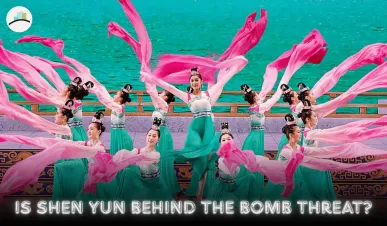
When Australians heard that a bomb threat had been tied to a Chinese dance group, many were confused. What does a classical performance troupe have to do with a security warning aimed at the nation’s prime minister? To understand that question, we need to look deeper at Shen Yun Performing Arts what it stands for, who runs it, and why it sometimes draws controversy.
Shen Yun Isn’t Just a Dance Show: It’s Part of a Larger Movement
Shen Yun Performing Arts is a nonprofit international dance and music company based in New York that was founded by practitioners of Falun Gong, a spiritual movement with roots in China. Falun Gong combines meditation, moral teachings, and physical exercises, and its followers have faced decades of persecution by the Chinese government since being banned in 1999.
Unlike many cultural troupes that simply entertain, Shen Yun’s performances are often framed as a celebration of traditional Chinese culture “before communism”, with dance scenes that explicitly or subtly critique the Chinese government. This blend of art and message sets it apart from typical touring dance companies.
Australian Prime Minister Evacuated From Residence After Chinese Bomb Threat Over Shen Yun Performance https://t.co/DiXLkGZ1Rn via @epochtimes #shenyun #australia #primeminister #Albanese #Sydney #TransnationalRepression
— Dan The Cook (@DanTheCookie19) February 25, 2026
While most spectators describe Shen Yun’s shows as beautiful and highly choreographed, the group’s roots in Falun Gong have long made it a lightning rod for debate and dispute.
Why Is Shen Yun Controversial? Dance, Ideology, and Perception
From the outside, Shen Yun can look like a colorful cultural show but the layers beneath the surface have stirred controversy on multiple fronts:
1. Political and Spiritual Messaging
Shen Yun’s performances often tell stories about persecution of Falun Gong adherents in China, scenes of imprisonment, torture, or spiritual struggle. That messaging, while meaningful to some, has been seen by others as politically charged rather than purely cultural.
2. Global Pressure and Bans
The Chinese government actively tries to limit Shen Yun performances abroad, arguing that the group is political propaganda associated with a spiritual movement the state considers subversive. Its diplomats have, in the past, written to theaters or pressured governments to cancel shows.
3. Allegations About Organizational Practices
In the United States and other countries, Shen Yun has faced criticism and even lawsuits alleging that certain aspects of its organization from demanding rehearsal schedules to how performers are treated have been abusive or exploitative. A lawsuit by a former dancer, for example, claimed harsh conditions and limited compensation during years of touring.
4. Conflicting Global Views
Shen Yun’s promotional partner, The Epoch Times, is a media outlet with links to Falun Gong that often publishes strong political content. That association adds another layer of controversy, blurring the lines between art, religion, and political messaging.
Together, these elements help explain why a cultural performance group like Shen Yun might not be seen by everyone as simply entertainment — but rather as part of a deeper ideological struggle that plays out on global stages.
Could Shen Yun Really Be the Reason Behind the Bomb Threat? Questions People Are Asking
When authorities received an email warning that explosives had been planted around The Lodge Australia’s official prime ministerial residence and tying the threat to Shen Yun performances, it raised immediate questions:
-
Was the threat purely about the performance itself?
-
Was someone trying to make a political point?
-
Was this linked to broader tensions involving the Chinese state or opposition movements?
While national security authorities confirmed there was no actual bomb found and the threat was false, the link to Shen Yun is not something that can be dismissed as random. Emails received by local organisers warned that if Shen Yun’s shows went ahead, violent consequences would follow mentioning specifically the prime minister’s safety.
In a social and geopolitical climate where cultural events are sometimes framed as symbols of political resistance, this has led many people to ask whether the involvement of Shen Yun is more than a coincidence.
Some argue that because Shen Yun openly presents narratives that contrast with the official policies or image of the Chinese government, its presence can stir heated reactions, online and offline. Others point out that misinformation and extremist individuals can latch onto any spark to create threats or fear.
In any case, the connection has prompted security experts and the public to explore not just the event itself, but the context behind it cultural, political, and social.
What Shen Yun Says About Itself: And What Critics Say
Officially, Shen Yun says its mission is to revive traditional Chinese culture and tell stories of spirituality and ancient heritage through classical dance and music, not to engage in politics.
But critics see a more complex picture. The troupe’s affiliation with Falun Gong, with its unique spiritual doctrines and opposition to communist repression, makes it a symbol of dissent in some eyes. Government critics in China label Falun Gong and its offshoots as cults or ideological threats, while Shen Yun supporters see themselves as cultural defenders.
This ambiguity where art, religion, and politics overlap is exactly what makes Shen Yun a magnet for controversy and speculation.
What Comes Next? Public Curiosity and Ongoing Debate
With national security investigations continuing, and tours underway around Australia and other countries, Shen Yun’s involvement in this episode has sparked a broader conversation:
-
Is this truly about one performance, or is it about deeper cultural or ideological clashes?
-
Are groups like Shen Yun being misunderstood, or unfairly blamed?
-
What role do global political tensions play in how such art is received and reacted to?
Even though authorities have confirmed the threat was false and there is no immediate danger, the very fact that a cultural troupe was mentioned in connection with a bomb notice shows how fragile the intersection between security, art, and politics can be in today’s world.
RELATED ARTICLE:
Bomb Threat at Prime Minister Albanese's Home: Link to Chinese Dance Group?
Whether you see Shen Yun as a celebration of culture, a symbol of resistance, or a flashpoint for controversy, one thing is clear: its presence in Australia this year has done more than put on dance shows it has become part of a larger conversation about identity, influence, and threat in an uncertain world.