
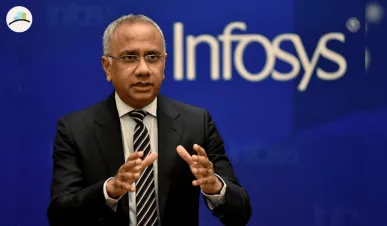
Infosys CEO and Managing Director Salil Parekh earned ₹82.6 crore in the financial year 2025‑26, a figure that is 742 times the median salary of an Infosys employee, according to the company’s latest annual report. The pay package, which includes base pay, bonuses, stock incentives and retirement benefits, has sparked fresh debate in India’s tech sector about executive compensation and wage disparities within corporate India.
CEO Pay Details: What Makes Up ₹82.6 Crore?
In FY26, Salil Parekh’s total compensation package rose modestly — by about 2%–2.5% year‑on‑year — to ₹82.60 crore. That’s roughly $8.7 million when converted to U.S. dollars.
Breakdown of his remuneration for FY26:
- Base salary: ₹7.97 crore
- Retiral & benefits: ₹0.53 crore
- Bonus & incentives: ₹23.35 crore
- Stock options / perquisites: ₹50.75 crore (largest portion)
These stock incentives came from the exercise of thousands of Restricted Stock Units (RSUs) under Infosys’s long‑term incentive plans.
Infosys insists Parekh’s pay comes solely from the parent company and not from subsidiaries or affiliates.
742 Times the Median Salary: What That Means
One striking fact in the annual report is the pay ratio between the CEO and the median employee. Parekh’s ₹82.6 crore compensation was 742 times the median salary of an Infosys employee in FY26.
According to Infosys figures:
- Median employee salary: ₹11,13,024
- This reflects a modest increase from roughly ₹10.7 lakh the previous year.
- Infosys says median salaries are adjusted for inflation and periodic reviews.
This gap sharply highlights wage disparity within corporate India — where top executives command large performance‑linked pay and stock gains, while rank‑and‑file salary growth may remain slower. Analysts and industry watchers often look at such ratios as indicators of corporate governance, equity, and workforce morale.
Why the Pay Rise and What It Signals
Infosys’s annual report attributed the compensation increase to continued performance and stock appreciation, especially linked to long‑term incentives. The company has been pushing deeper into enterprise AI services, which it says contributed to business growth and, by extension, executive pay decisions.
While the 2%–2.5% increase in total pay may seem modest, the absolute figure remains among the highest CEO compensation packages in India’s IT sector — particularly in stock‑linked rewards.
Meanwhile, Infosys leadership continues to project confidence in its strategic direction, even as tech firms globally navigate slower growth, evolving digital transformation spend, and macroeconomic headwinds.
Industry Comparison: TCS and Benchmarks
In comparison, Tata Consultancy Services (TCS), India’s largest IT services company, reported its CEO’s compensation at around ₹28 crore in the same period — roughly one‑third of Parekh’s earnings.
This contrast underscores differences in compensation philosophy but also raises questions about how Indian tech giants structure executive pay relative to performance, shareholder returns, and internal salary averages.
Employee Pay Realities and Wider Debate
The pay disparity has drawn both interest and criticism among tech professionals and labour advocates. Online discussions highlight contrasting perceptions, with some arguing that high executive pay reflects performance leadership, while others point to widening income gaps and uneven salary growth for junior and mid‑level employees.
In some corporate forums, workers have noted that while par salaries for entry‑level roles have remained modest, executive packages — boosted by performance incentives and stock gains — have soared, contributing to broader discussions around wage fairness in India’s tech ecosystem.
Infosys Financial Performance and Context
The backdrop to this compensation story is Infosys’s overall financial results for FY26:
- Revenue and profits grew, with net profit rising over 10% year‑on‑year.
- The company reported strong free cash flows and maintained a sizeable global workforce exceeding 3.28 lakh employees.
Despite these results, the IT industry is facing slower growth forecasts, with Infosys projecting 1.5%–3.5% revenue growth for FY27 in constant currency terms — a modest outlook considering global competition and digital transformation cycles.
MORE ARTICLES:
What the Pay Figures Say About Corporate India
Salil Parekh’s ₹82.6 crore package and the 742x pay ratio against the median employee salary shed light on enduring debates in corporate compensation — especially in high‑tech sectors where performance‑linked incentives and stock options can drive executive pay far beyond base salary figures.
Whether this reflects market norms, talent retention strategies, or broader socio‑economic challenges, the figures published in the Infosys FY26 annual report will likely continue to fuel discussions among investors, employees, and the wider public about income inequality, governance, and value creation in India’s largest tech firms.



