
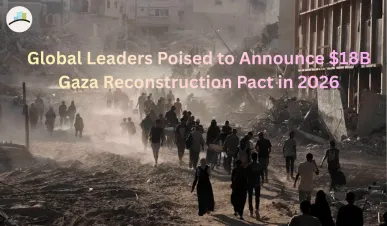
In a dramatic shift in international aid diplomacy, world leaders are reportedly finalizing a massive $18 billion reconstruction pact for Gaza more than triple the amount previously pledged. This comes amid intense negotiations between the United States, the European Union, Arab League members, and the United Nations.
Sources indicate the deal, expected to be formally unveiled by mid‑March 2026, aims to accelerate rebuilding of essential infrastructure, homes, hospitals and schools in Gaza, which has suffered extensive destruction in recent years.
This new proposal has sent shockwaves across political and humanitarian communities, raising questions about future peace prospects and long‑term economic stability in the region.
High Stakes Diplomacy: Who Is Backing It?
The pact is said to carry backing from:
-
United States — offering leadership and the largest financial share
-
European Union — coordinating contributions from member states
-
Gulf Cooperation Council (GCC) nations — reportedly committing large financial packages
-
Egypt and Jordan — pledging logistic and infrastructure support
-
United Nations — coordinating reconstruction oversight and accountability mechanisms
Officials meeting in Geneva and Washington D.C. have insisted that transparency, accountability and long‑term civilian welfare will be key conditions.
Some participating countries are calling the initiative “the largest coordinated humanitarian reconstruction program in modern history.”
MORE ARTICLES:
What This Means for Gaza
✔ New homes and buildings: Replacing tens of thousands of destroyed structures
✔ Healthcare: Reconstruction of hospitals and medical centres
✔ Education: Rebuilding destroyed schools and universities
✔ Water & electricity: Restoring critical utilities infrastructure
✔ Employment: Stimulating jobs through construction and tech investments
If executed as stated, this effort could reshape Gaza’s economy and provide an alternative to decades of stalled aid commitments.
🇺🇸🇵🇸 BOARD OF PEACE PLEDGES $5B FOR GAZA
— Roxom TV (@RoxomTV) February 16, 2026
“The Board of Peace will prove to be the most consequential International Body in History, and it is my honor to serve as its Chairman.” - Donald Trump pic.twitter.com/pXa17hMIza
Political and Public Reactions
The response has already been fierce and wide‑ranging:
United States:
Senior U.S. lawmakers praised the pact as “a step toward tangible peace and stability,” but some critics say it lacks enforceable mechanisms to prevent future conflict.
Europe:
EU diplomats called it “a collective responsibility” and a model for future reconstruction efforts globally.
Regional Voices:
Egypt and Jordan welcomed the deal but emphasized that “sustainable peace requires political solutions, not just financial ones.”
Grassroots Activists:
Some NGOs argue the plan must include civil society input, human rights protections, and public transparency to avoid repeating mistakes of past aid initiatives.
Will It Bring Long‑Term Peace? Experts Weigh In
Experts are divided:
🔹 Optimists say this deal can catalyze a new phase of cooperation and rebuilding, encouraging investment and diplomacy.
🔹 Sceptics warn that reconstruction without reconciliation has historically failed in other war‑torn regions.
🔹 Some analysts point out that this deal’s success hinges on on‑the‑ground governance, clear accountability, and protections for civilians above political interests.
What Should Readers Watch For Next
This pact is still not finalized, so the next key events to watch will be:
📌 March 10–15, 2026: Expected official launch summit
📌 Announcement from White House or EU HQ — signing ceremony details
📌 Statements from Arab League leaders on contribution amounts
📌 Public response from Israel and Palestinian leadership
If any country drops out, scales back funds, or conditions participation, the pact’s credibility could shift dramatically.



