
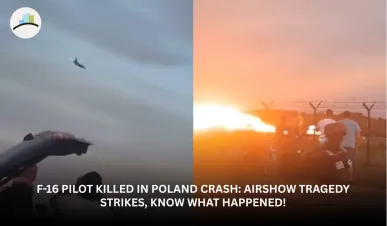
In a devastating turn of events, an F-16 fighter jet crashed during an airshow rehearsal in Poland on August 28, 2025, killing the pilot. The crash occurred just days before the highly anticipated Radom Airshow, sending shockwaves through the aviation community and leaving fans questioning how such a tragedy could happen during a routine practice. What caused this catastrophic crash? Was it a mechanical failure, human error, or something more? Let’s dive into the details of this heartbreaking accident and what it means for the future of airshows and military aviation.
The Shocking Details of the F-16 Crash
An F-16 fighter jet, known for its agility and precision, went down during an airshow rehearsal in Radom, Poland. The pilot, whose identity is still being withheld by authorities, was performing high-risk aerial maneuvers when the jet lost control and crashed in a remote field, far from residential areas. Emergency crews responded swiftly, but tragically, the pilot was pronounced dead at the scene.
-
Timing of the crash: The incident took place just days before the Radom Airshow, one of Poland's largest and most popular events. The airshow attracts thousands of spectators from around the world, eager to witness thrilling aerial displays from various international air forces.
-
Impact on the airshow: Organizers have yet to decide whether to proceed with the event as planned. The tragic crash has cast a shadow over the upcoming airshow, with many fans unsure if it will go on without a moment of reflection and remembrance for the fallen pilot.
MORE ARTICLES:
What Went Wrong? The Investigation Begins
While the exact cause of the crash remains unclear, aviation experts and authorities are diving into the investigation with urgency. Initial reports suggest that the jet was performing a routine aerial maneuver when something went terribly wrong.
-
Mechanical failure? Was there a technical malfunction that led to the crash? Fighter jets like the F-16 are designed for extreme maneuvers, but they are still complex machines that require perfect calibration. Could a hidden defect have caused the tragic outcome?
-
Pilot error? Could human error be the cause of the accident? Airshow pilots undergo extensive training to handle high-speed maneuvers, but even the most experienced pilots can face dangerous split-second decisions that lead to fatal mistakes. Could this pilot have miscalculated the maneuver or faced an unforeseen challenge mid-air?
-
Environmental factors: Could weather conditions have played a role? Winds, sudden turbulence, or unexpected cloud cover can sometimes interfere with a pilot’s ability to control the aircraft, even in seemingly perfect conditions.
These are just some of the questions investigators are grappling with as they begin piecing together the details of what led to this tragic event.
The Broader Impact: Will This Change the Future of Airshows?
This devastating incident raises important questions about the future of aerial demonstrations and high-risk performances at airshows worldwide. Airshows have long been a spectacle, thrilling audiences with incredible stunts and showcasing the power and precision of military aircraft. But this tragic crash has left many wondering: is it worth the risk?
-
Reevaluating safety: Will this crash prompt a reevaluation of safety protocols at airshows? While airshow crashes are rare, the industry is facing increased scrutiny over pilot safety, aircraft maintenance, and audience protection. Will there be calls for more stringent guidelines and even less dangerous stunts in the future?
-
Public trust: For years, airshows have been seen as a celebration of aviation excellence. However, with the crash now under investigation, public trust may be shaken. Could this event discourage fans from attending future airshows? And how will the aviation community work to restore that trust?
-
The role of the military: As military jets and pilots are involved in these displays, there’s also the question of whether airshows should reconsider the level of military involvement. How much responsibility lies with military commanders and the armed forces when it comes to ensuring pilot and public safety at such events?
What Happens Next? The Legacy of This Tragedy
This tragedy has already sparked a worldwide conversation about aviation safety, risk management, and the human cost of high-flying stunts. As the investigation continues, questions about what happened will need to be answered not just for the sake of the victim’s loved ones, but for future generations of aviators.
-
Future airshows: With this crash fresh in the public’s mind, organizers will have to carefully consider how they move forward. Will airshows across the globe change their safety protocols or even pause certain maneuvers that are deemed too risky?
-
Memorializing the pilot: Regardless of the investigation’s outcome, the aviation community will undoubtedly honor the bravery of the pilot who gave their life doing what they loved. The pilot’s legacy will likely live on, serving as a reminder of the dangers involved in the pursuit of aviation excellence.
When Can We Expect Answers?
While the investigation is ongoing, answers may take weeks to come to light. The Polish Air Force and other experts are working tirelessly to understand what went wrong, but given the complexities of fighter jet accidents, the truth may take time to unravel.
-
The Radom Airshow is still scheduled to begin in early September, but it is unclear whether the event will proceed without honoring the fallen pilot. The next few days will be critical as officials make decisions regarding event cancellations, restructuring, and safety protocols.



