
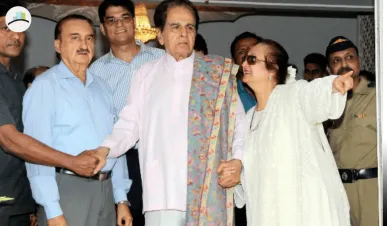
Legendary actor Dilip Kumar, known for his immense contribution to Indian cinema, played an unexpected yet pivotal role during the Kargil War in 1999. As tensions between India and Pakistan escalated, Kumar made a personal call to Pakistan’s then-Prime Minister, urging for an end to the conflict. Alongside his appeal for peace, Dilip Kumar made a poignant remark about the struggles faced by Indian Muslims during such turbulent times, emphasizing how difficult it is for them to leave their homes in times of national crisis. This article delves into Dilip Kumar’s role in peace efforts during the Kargil War and his empathetic reflection on the plight of Indian Muslims.
Dilip Kumar’s Call to Pakistan PM During the Kargil War
As the Kargil War unfolded, Dilip Kumar, who had always been a symbol of unity and peace, took an unexpected but powerful step. Known for his deep sense of patriotism and concern for humanity, the actor reached out to then-Pakistan Prime Minister Nawaz Sharif, urging him to help de-escalate the situation.
His call to Sharif was a desperate plea for peace, asking for an end to the hostilities that were causing immense loss of life on both sides. Kumar, who had close personal ties with Pakistan, including friendships with many in the country’s film industry, used his influence to encourage dialogue between the two nations. Despite the tense situation, Kumar believed that a peaceful resolution was not only possible but necessary to prevent further bloodshed.
The Struggles of Indian Muslims During Times of Conflict
During the conversation with Pakistan’s PM, Dilip Kumar also expressed his concerns about the struggles faced by Indian Muslims in the aftermath of the Kargil War. He highlighted how the Muslim community in India often finds it difficult to leave their homes during periods of heightened tension between India and Pakistan. Kumar spoke out about how Indian Muslims are caught in a difficult position, as nationalistic sentiments rise during times of war, and they are often unjustly blamed or viewed with suspicion.
Kumar, himself a Muslim, shared his empathy for the community, calling for greater understanding and compassion. He emphasized the need for national unity, where people of all faiths should stand together, regardless of the political turmoil around them.
The Role of Dilip Kumar in Promoting Peace and Unity
Dilip Kumar’s influence went beyond the silver screen. Known for his dignified presence and humanitarian values, Kumar took every opportunity to promote peace and foster goodwill. His message during the Kargil War was not just about stopping the conflict between two nations, but also about strengthening the fabric of Indian society by protecting its Muslim citizens from unwarranted prejudice.
Despite being an actor, Dilip Kumar’s voice carried significant weight, particularly because of his reputation and the respect he garnered across borders. He showed that even in times of great tension, individual actions could have a profound impact on international relations and domestic unity.
India-Pakistan Relations and Dilip Kumar’s Legacy
Dilip Kumar’s appeal during the Kargil War serves as a reminder of the importance of dialogue in times of conflict. His message, advocating for peace and understanding, remains a valuable lesson in the complex relationship between India and Pakistan. While the political leaders of the time were focused on military solutions, Dilip Kumar took the path of diplomacy, using his platform to call for an end to the violence and the beginning of a constructive dialogue.
Kumar’s legacy is one of peace and compassion, and his efforts during the Kargil War further cemented his status as a symbol of unity, both in the realm of cinema and beyond.
MORE ARTICLES:
Conclusion
Dilip Kumar’s intervention during the Kargil War revealed his deep commitment to peace and harmony. By reaching out to Pakistan’s PM and advocating for an end to the conflict, he showed the world that even in times of war, the power of dialogue and empathy can make a difference. His reflection on the struggles of Indian Muslims serves as a poignant reminder of the challenges faced by marginalized communities during periods of national crisis. Dilip Kumar’s legacy continues to inspire, reminding us all of the importance of peace, unity, and understanding in times of division.



