
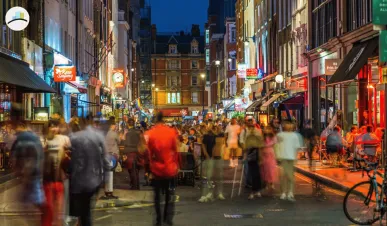
Britain's Nightlife Is Losing One in Four Late-Night Venues and Birmingham Shows Why
Operating costs have surged 30–40% since 2020, one in four adults in England now abstains from alcohol, and Birmingham the UK's second city has recorded the steepest decline of any major city.
Britain's night-time economy is contracting at a pace that industry leaders are calling a cultural emergency. According to the Night Time Industries Association (NTIA), more than a quarter of all late-night venues across the UK closed permanently between 2020 and 2025 a collapse driven not by a single cause, but by a convergence of rising costs, changing social habits, urban redevelopment, and a structural mismatch in how local councils regulate nightlife.
Birmingham has absorbed the sharpest blow of any major UK city. The city experienced a 28% drop in the number of bars, clubs and other late-night establishments between 2020 and 2025, the largest decline of any major UK city, according to NTIA data.
The economics of running a venue have deteriorated sharply. Michael Kill, CEO of the NTIA, said venues are struggling after seeing "a 30% to 40% increase in operating costs since 2020," compounded by government budgets that have raised national insurance contributions and the minimum wage, plus a looming energy crisis linked to the war in Iran. Even successful venues, he said, "feel that they're either just breaking even or losing money."
Alcohol abstinence is accelerating the pressure on an economic model that has always depended on bar revenue. An NHS survey published earlier this year found that one in four adults in England do not drink alcohol, with the West Midlands and London recording the highest proportions of non-drinkers.
Birmingham's difficulties are also structural in ways that go beyond costs and habits. Andy Milford, a veteran promoter who runs events at Digbeth Dining Club, said the city has comparatively low density in its centre 11,400 people per square mile, against 13,210 in Manchester and 14,980 in London meaning late-night transport becomes a significant barrier. "Outside a really expensive taxi ride, Birmingham is really difficult to get out of after midnight," he said.
Milford also pointed to a pandemic-era shift in working patterns, a spate of fatal stabbings in the city that created "real fear for people" heading out, and an exodus of nightlife activity toward suburban neighbourhoods. "Most of the people living in the city are students," he said, meaning "there's no real long-term community to build that culture any more."
The pattern extends beyond Birmingham. In Manchester, Night & Day Café a local music venue faced potential closure after residents in newly built adjacent flats complained about late-night noise, resulting in a three-year dispute that ended with the venue being ordered to limit loud music in the small hours. Kill identified a systemic fault at the centre of this: a "huge void between licensing and planning departments" within local councils, which issue late-night licences to venues on one hand while approving new residential developments next door on the other
London's Soho is caught in a similar conflict. Several court cases remain pending between venues, Westminster council, and local residents over noise and antisocial behaviour complaints. However, a significant policy shift was announced this month: London Mayor Sadiq Khan could be handed powers to overrule councils that block pubs and clubs from opening late.
The unique angle that most coverage of the decline misses is generational displacement. Puggy Roberts, 57, a Birmingham regular who has been clubbing in the city for about 40 years, described a vicious cycle: "If you don't go out, you don't get the venues." His companion Jen Ashford-Mowbray, 58, added that lower footfall directly drives up ticket prices, further deterring attendance. Both noted that the age profile of those still going out has risen sharply the younger crowd that should be filling venues has, in large part, stopped coming.
Kill said the cultural stakes extend well beyond individual venues. "We're known for our clubs, our events and our festivals," he told the Guardian. "People see us as a destination for creatives to start their careers. We have to recognise how important it is."
Birmingham's clubs have not always been this quiet. Legendary venues that shaped British music Rum Runner, where Duran Duran got their start; Que Club, which hosted David Bowie, Run-DMC and Daft Punk; and JB's in nearby Dudley, where U2 and Judas Priest played early sets have all closed. Rum Runner was demolished in 1987 and turned into a Wetherspoons. Que Club closed in 2017. JB's became a martial arts centre after shutting in 2011.
What replaced them is a telling indicator of where spending is migrating. On Broad Street, once Birmingham's nightlife heartbeat, a shuttered branch of Pryzm the national nightclub chain now stands empty. Bar one venue in Brighton, all Pryzm locations closed in 2024. Meanwhile, games bars and experience-led venues such as Boom Battle Bar are drawing customers who want socialising without a dancefloor.
Whether the Saturday night out is dying or simply relocating to suburban pubs, festival grounds, or experience venues remains genuinely contested. What is not contested is the scale of the structural and economic pressure now bearing down on every late-night venue still standing.
Other News-
-Met Gala 2026: Time, Guest List, Theme and How to Watch Live
-Cinco de Mayo 2026 Celebrations Sweep Across the U.S. With Festivals, Food, and Cultural Pride
-John Sterling Dead at 87: Yankees Legendary Radio Voice Dies, Legacy & Career



