
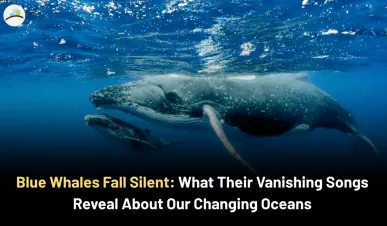
You might not think much about the sounds drifting beneath the waves, but lately, ocean scientists are sounding the alarm about an unexpected silence. Blue whales—the giants of the sea and the loudest animals on Earth—are growing strangely quiet up and down the Pacific coast. From California to the far reaches of the Southern Hemisphere, their signature booming calls are fading. The big question everyone’s asking: why now, and what does it signal for all of us?
#ResistanceEarth
— Bambooshooti™ 🇺🇸🥁🌊😷💉🌻 (@bambooshooti) August 6, 2025
Blue whales aren't singing as much, and scientists believe it's because they don't have enough to eat. Increasing ocean temps have reduced the amount of krill available for the whales to eat.https://t.co/3JCRAd9Gtn
The Importance of This Event
Let’s put it simply: when the planet’s biggest animals start going silent, it should worry everyone. These whale songs are much more than an underwater soundtrack—they’re a real-time pulse check for ocean health. Honestly, whales sing to hunt, find mates, and communicate across huge distances, so their silence tells us something’s off.
-
Their silence tracks with rapid declines in food sources—when heat waves like “The Blob” raise sea temperatures, krill die off and whales go hungry.
-
The shift isn’t just a fluke; blue whales are missing meals and putting all their energy into surviving, not singing or mating.
-
Noticing fewer blue whale calls should jolt us to think about broader climate chaos: if the top of the food chain can’t keep up, the whole web is at risk.
It’s not just sad for marine lovers—it’s a red flag for humanity about deteriorating ocean systems.
More Articles:
Hidden Factors to Consider
Digging beneath the headlines, a few hidden dangers and ripple effects deserve more attention. For one, scientists are realizing how deeply ocean heat waves and human noise collide to disrupt marine life on a massive, and maybe permanent, scale.
-
The silence is also about resilience—or lack of it. Blue whales have slow reproduction cycles, so if their behavior or nutrition shifts now, population recovery could take decades.
-
There’s an eerie repeat of history here. Previous mass changes in animal behavior have foreshadowed ecosystem collapse—just think of vanishing bird calls causing similar alarm in forests.
-
Experts warn we’re near a tipping point: the long memory and “cultural” traditions of whale songs could be lost forever if populations keep shrinking and stop singing altogether.
It’s not just that whales are quiet. It’s the complex pattern—heat, stress, noise, hunger—all combining into a threat that’s bigger than any one species.
Understanding the Consequences
So where does this leave us? Some scientists argue that listening to the ocean might need to become a top tool for monitoring global climate health. With blue whales silent, it’s a warning that marine heatwaves and noise aren’t just temporary issues—they could reshape our oceans and their ability to lock away carbon, regulate weather, and feed millions.
-
Policy makers and conservationists are being pushed to act faster, knowing economic routes like fishing, tourism, and even carbon trading are all tangled up in the fate of ocean giants.
-
For regular people, the fallout could show up as costlier seafood, fewer whales on safaris, or just a scarier climate future.
-
The big question: can society adjust in time, or will this silence become the new normal in our lifetimes?
Wrapping Up: The Ocean’s SOS Isn’t Just Noise
All things considered, the fading song of the blue whale isn’t just a scientific oddity. It’s the ocean’s way of warning us—loudly, through silence—that things are unraveling beneath the surface. As marine heatwaves become more frequent and the delicate dance of ecosystem balance tips, expect this story to only grow in urgency. Staying tuned to the signals from beneath the waves might be the best way to rethink how we care for our planet, before the whales—and the warnings—vanish for good.



