
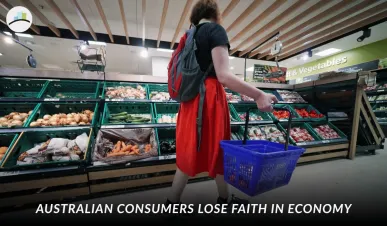
Australian consumers are increasingly losing faith in the economy, with confidence surveys near historic lows as households delay major purchases and express growing worries about living costs, interest rates and future financial stability. Recent data shows sentiment remains subdued despite a modest uptick, suggesting deep‑seated pessimism that could weigh on spending, housing demand and broader economic growth in 2026.
‘
— 🇦🇺 (@OZzSue5) May 22, 2026
@AlboMP making Australians warm and fuzzy
Australian consumers lose faith in economy
Huge sign Aus economy is in big trouble.
. https://t.co/Mt8o9t8rzR
Australian Consumers Lose Faith in Economy as Confidence Plunges
Australian households are increasingly pessimistic about the economy, a trend that shows consumers losing faith in their financial outlook and pulling back on big purchases, according to fresh data and surveys.
The shift in sentiment reflects rising cost‑of‑living pressures, higher interest rates, global uncertainty and fears about future financial stability — leaving many Australians cautious about spending and more likely to save than splurge.
Confidence Index Shows Persistent Pessimism
Consumer confidence surveys — such as the Westpac–Melbourne Institute Consumer Sentiment Index — help gauge how Australians feel about the economy. A reading below 100 points signals pessimism, while a figure above 100 suggests optimism. Recent data shows the index at around 83 points, well below its long‑term average of roughly 100, underscoring a deep sense of economic doubt among households.
While this figure is a slight uptick from a very low reading the previous month, it still remains significantly subdued, indicating that even small improvements aren’t enough to restore broad confidence.
MORE ARTICLES:
Fewer Australians Likely to Buy Big‑Ticket Items
A striking sign of eroding faith is that fewer Australians are considering major purchases — such as cars, appliances or homes — in the near future. New survey data shows intentions to buy big items have fallen sharply, signalling that consumers are tightening their budgets and delaying discretionary spending.
This trend matters because consumer spending accounts for a large share of Australia’s economic activity; when people stop buying, it can slow overall economic growth, affect business revenues and increase pressure on companies to scale back services or jobs.
Key Drivers Behind the Drop in Confidence
Several interconnected forces are weighing on consumer sentiment:
• Rising living costs: Australians have faced ongoing inflationary pressures in recent years, particularly in essentials like fuel and groceries, which stretches household budgets.
• Higher interest rates: Multiple interest rate hikes by the Reserve Bank of Australia have increased borrowing costs, dampening enthusiasm for loans, mortgages and other credit‑linked spending.
• Global uncertainty: The economic impacts of international tensions — such as disruptions to oil supply — contribute to worries about inflation, jobs and the future.
• Slow wage growth: Stagnant wages relative to rising expenses make everyday budgets feel tighter, leaving many consumers feeling financially stretched.
Economists note this combination of factors creates a feedback loop: pessimism leads to reduced spending, which then slows business growth and can further dampen confidence.
Impact on Key Economic Areas
Consumer Spending: With confidence low, Australians are prioritising essentials over discretionary goods. This shift affects retailers, service providers and sectors like automotive sales.
Housing Market: Surveys show homebuyer sentiment remains weak, with fewer Australians feeling confident about buying property. This has contributed to softening housing demand, even as geopolitical and fiscal policy changes influence investor behaviour.
Business Conditions: Low consumer confidence frequently parallels weaker business sentiment, with some industries reporting cautious investment and hiring plans in response to slowing demand.
What Experts Say About the Current Trend
Economists describe the current sentiment environment as fragile and cautious rather than outright optimistic. Some analysts point out that although there are small bumps in short‑term confidence figures, the larger picture remains subdued and uncertain.
Historically, when consumer confidence dips below long‑term average levels for extended periods, it can signal slower economic growth ahead — because household spending is one of the biggest drivers of GDP.
Government and Reserve Bank Moves Under Scrutiny
Policymakers and central bankers closely watch consumer sentiment data because it influences monetary policy decisions and fiscal planning. The Reserve Bank of Australia — aiming to balance inflation targets with economic growth — has repeatedly adjusted interest rates in response to inflation dynamics, which in turn affects consumer psychology.
At the same time, public debate has intensified around government budget measures, taxation and economic policy direction, with critics arguing that unclear economic strategy adds to household uncertainty.



