
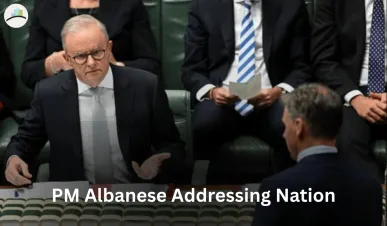
Australia is staring at a sudden economic shock as Prime Minister Anthony Albanese addressed the nation amid a rapidly escalating global crisis triggered by tensions involving Iran in the Middle East. The conflict has begun disrupting global oil supply chains, pushing fuel prices sharply higher and placing immediate pressure on households, transport systems, and small businesses across the country.
In his address, Albanese made it clear that while Australia is not directly involved in the conflict, the economic aftershocks are already being felt. Petrol prices have surged in a matter of days, and fears of prolonged instability have raised concerns about inflation and a broader slowdown in economic activity.
Fuel Prices Surge, Cost of Living Under Pressure
The most immediate impact of the crisis is being seen at fuel stations. Rising global crude oil prices have translated into higher petrol and diesel costs, adding to the already strained cost of living in Australia. For many families, this means increased expenses not just for travel, but also for everyday goods, as transport costs ripple through the supply chain.
The government has warned that the situation could worsen if global tensions escalate further, with economists cautioning about the risk of “stagflation” a combination of rising prices and slowing economic growth.
Other Stories-
-MAFS Australia 2026 Finale Week: The Drama So Far and Which Couples Are Still Together
-US-Israel Strikes on Iran: What’s Going On in Isfahan Right Now!
Government Announces Major Fuel Relief
In a bid to provide immediate relief, the Albanese government has announced a temporary cut in fuel excise, effectively halving the tax on petrol for the next three months. This move is expected to reduce fuel prices by around 25–26 cents per litre, offering direct and visible relief to consumers.
The decision, costing billions to the federal budget, is being positioned as a necessary step to cushion households from a sudden and sharp economic blow.
Support Package for Businesses
Beyond individual consumers, the government has also rolled out a support framework aimed at protecting small businesses — many of which are highly sensitive to fuel and logistics costs.
Key measures include:
- Flexible tax payment arrangements
- Temporary relief from penalties
- Pausing certain debt recovery actions
These steps are designed to ensure that businesses can maintain operations during the volatility rather than shutting down under financial pressure.
Fuel Security and Emergency Planning
The Prime Minister also outlined a broader strategy to safeguard Australia’s fuel supply. This includes strengthening fuel reserves and preparing contingency plans in case the global situation deteriorates further.
Officials are closely monitoring supply chains to prevent shortages and ensure that critical sectors — including healthcare, logistics, and emergency services — continue to function without disruption.
A Call for Public Cooperation
In a rare move, Albanese also appealed directly to Australians, urging them to be mindful of fuel consumption. Citizens have been encouraged to avoid unnecessary travel and adopt more efficient usage habits during this period of uncertainty.
The message was clear: while government intervention can ease the burden, public cooperation will play a crucial role in managing the crisis effectively.
What Comes Next
The government has संकेत that additional measures could be announced in the upcoming federal budget, especially if global conditions remain unstable. With billions in potential revenue from high commodity prices, there is room for further economic support if required.
For now, the focus remains on stabilizing fuel prices, supporting businesses, and preventing the crisis from spilling over into a deeper economic downturn.



