
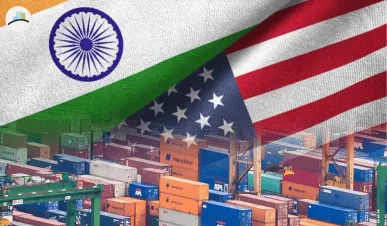
In a monumental shift shaking up the global economy, the U.S. Trade Representative Jamieson Greer has officially signaled a massive departure of American companies from China to India, reshaping the future of global trade as we know it! This change isn’t just another trade deal or a casual business move it’s the beginning of a new economic era that could permanently alter the balance of power in global supply chains.
What does this mean for the U.S., China, and India? Why are companies making the drastic move now? And most importantly, what could this lead to? The implications are enormous, and here’s everything you need to know about why this historic shift is taking place.
Why are US Firms Moving to India?
For years, China has been the global manufacturing hub for nearly every product imaginable from electronics to textiles, to toys and beyond. However, things are changing rapidly. Major disruptions in global trade, rising tensions between the U.S. and China, and unprecedented supply chain breakdowns during the pandemic have left companies scrambling for alternatives.
India is emerging as the solution and U.S. companies are already heading there in droves. U.S. Trade Representative Jamieson Greer confirmed that numerous American firms are making the move to India, attracted by a vast workforce, government reforms, and access to a growing consumer market. The shift is not just an opportunity but a necessity for companies looking to survive in an increasingly volatile geopolitical climate.
So, why now?
The Growing Pressure on China: Why the Move Makes Sense
The US-China trade war, rising tariffs, and supply chain disruptions over the past few years have made it clear: relying solely on China for manufacturing is no longer sustainable. Costs in China have risen, while geopolitical tensions have made it riskier for companies to maintain such a heavy reliance on Chinese production. The ongoing semiconductor shortage and disruptions in the supply of raw materials have also proven to be dangerous for companies overly dependent on Chinese factories.
As a result, U.S. firms are searching for safer, more reliable alternatives, and India has emerged as the most promising destination.
India’s Rapid Transformation: The Perfect Time to Invest
India is now positioned to offer what China once did: cheap labor, a large pool of skilled workers, and a rapidly growing economy. However, there’s more to India’s transformation than just cost-effective labor. The Indian government has made significant strides in attracting foreign investment, implementing tax reforms and incentives for manufacturers. The country is investing in infrastructure at a rapid pace, with state-of-the-art manufacturing hubs springing up across major cities like Bangalore, Hyderabad, and Delhi.
Furthermore, India has signed trade agreements with numerous countries and is becoming an increasingly integrated partner in global supply chains. It’s clear: India is ready for business, and U.S. companies are taking notice.
How Big is the Shift?
This isn't a small move. The magnitude of this transition is significant and could have ripple effects for years to come. Major U.S. firms are already relocating parts of their operations to India, with some planning to move entire factories. In industries such as electronics, automobile manufacturing, and textiles, the shift is already in motion.
This isn’t just about finding lower production costs it’s about diversification. U.S. companies want to ensure they aren’t vulnerable to disruptions like those caused by the pandemic or trade wars with China. By shifting to India, they are building a more resilient supply chain and tapping into the potential of a growing middle class.
MORE ARTICLES:
What Could This Mean for China?
The economic implications for China are profound. Losing a significant chunk of U.S. manufacturing could have devastating consequences for China’s economic growth and global influence. With major players in the tech, automotive, and consumer goods industries pulling operations out of China, Beijing may face severe economic consequences.
This shift could also diminish China’s role as the global production hub, as more nations look to India, Vietnam, and Mexico as potential alternatives. It’s not just about the U.S. China’s other trading partners are also rethinking their manufacturing strategies, and India is quickly becoming a favored destination for many.
India’s Bold New Role: What’s Next?
This shift marks a game-changing moment for India. Not only will the country benefit from the influx of foreign investment, but it could also become the world’s next manufacturing giant overtaking China’s position as the go-to hub for production. This will lead to a boom in jobs, technological advancements, and increased global trade.
Additionally, as India grows in importance, we can expect closer ties between the U.S. and India, leading to greater economic cooperation and security collaboration. The India-U.S. partnership could reshape global economic dynamics for the better, especially as both countries face increasing competition from China and other rising economies.
The Big Picture: What Does This Mean for the World?
This seismic shift isn’t just about the U.S. and China. It signals the beginning of a broader transformation in the global supply chain one where companies are no longer dependent on a single country. Instead, businesses are learning the importance of diversification, resilience, and risk management.
India’s rise as a manufacturing hub will not only strengthen its economy but could set off a domino effect across other regions. The future of global trade will be marked by new partnerships, new strategies, and a global economic realignment and India is poised to play a leading role in it.
What’s Next? The Countdown Begins
As more U.S. companies begin shifting their production to India, we will soon see the full impact of this strategic move. Will India fully step into China’s shoes as the world’s manufacturing powerhouse? Will this move signal the end of China’s reign as the economic leader in Asia? Only time will tell, but one thing is clear India is now the future of global trade.
Key Takeaways
-
Major U.S. firms are moving to India to diversify supply chains and reduce reliance on China.
-
India’s manufacturing landscape is rapidly evolving, offering cost-effective labor, infrastructure investment, and trade incentives.
-
Geopolitical tensions and pandemic disruptions have led many U.S. companies to explore new, reliable production hubs.
-
This shift marks the beginning of a new economic era where India is becoming the next global manufacturing hub.
-
China’s dominance in global trade is being challenged, with India emerging as a strong contender to take its place.



