
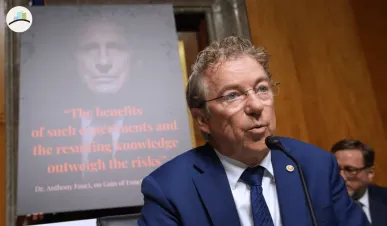
Former White House medical adviser Dr Anthony Fauci returned to Capitol Hill for a highly debated Senate hearing, where he faced questions from Senator Rand Paul over his role during the COVID-19 pandemic.
The hearing reopened long-running disputes surrounding the pandemic response, including questions about COVID-19 origins, research funding and decisions made during the public health emergency.
The appearance attracted significant attention because of the years-long public clash between Fauci and Paul, who has repeatedly criticised Fauci’s handling of pandemic-related issues.
During the hearing, Fauci invoked his Fifth Amendment right when questioned on certain matters, saying he would not answer questions that could potentially expose him to legal consequences.
Dr. Anthony Fauci on Wednesday repeatedly invoked the Fifth Amendment and declined to answer dozens of questions from senators in a Republican-led committee hearing about his handling of the COVID-19 pandemic. The scientist, who helped lead the nation’s COVID-19 response, was… pic.twitter.com/JFkYa3KeDO
— The Associated Press (@AP) July 29, 2026
Why Was Anthony Fauci Called Before the Senate?
The hearing focused on several controversies connected to Fauci’s role as one of the leading public health officials during the COVID-19 pandemic.
Senator Rand Paul and other critics have continued questioning:
- Government pandemic decisions
- COVID-19 origins
- Research funding linked to coronavirus studies
- Fauci’s public statements during the pandemic
Fauci has defended his record and maintained that his decisions were based on available scientific evidence at the time.
Fauci Invokes Fifth Amendment During Testimony
One of the most discussed moments of the hearing came when Fauci repeatedly invoked the Fifth Amendment.
The constitutional protection allows individuals to avoid answering questions when they believe responses could potentially be used against them in legal proceedings.
Fauci said his decision was connected to concerns over how his answers could be used rather than an admission of wrongdoing.
The move immediately intensified political debate surrounding the hearing.
Rand Paul’s Long-Running Criticism of Fauci
Senator Rand Paul, a physician himself, has been one of Fauci’s most vocal critics since the pandemic.
Their disagreements became widely known during earlier congressional hearings, where Paul challenged Fauci over issues including:
- COVID-19 origins
- Laboratory research
- Public health recommendations
- Pandemic policies
Their exchanges became some of the most watched moments from COVID-era congressional hearings.
The COVID Origins Debate Returns
A major focus of the hearing was the ongoing debate over how COVID-19 began.
Two major theories have continued to dominate discussion:
Natural Origin Theory
Many scientists have supported the theory that the virus emerged through natural transmission from animals to humans.
Laboratory-Related Theory
Some officials and politicians have argued that a laboratory accident should be investigated as a possible explanation.
No definitive public consensus has ended the debate, and investigations into the origins of COVID-19 have remained politically and scientifically contested.
Fauci’s Pandemic Diaries Become Part of Debate
The hearing also focused on excerpts from Fauci’s pandemic-era diaries.
The diaries reportedly included personal reflections about:
- The early stages of COVID-19
- Government response decisions
- Internal discussions during the pandemic
- His experience becoming a public figure during the crisis
Senator Paul used diary entries as part of his questioning, arguing that they raised further questions about Fauci’s public statements. Fauci and his supporters have disputed those interpretations.
Fauci Defends His COVID Record
Throughout the pandemic, Fauci served as one of the most recognisable public health officials in the United States.
He became the face of federal COVID guidance, appearing regularly in public briefings and advising Americans on measures including vaccination, masking and reducing transmission risks.
Supporters credit him with communicating scientific guidance during an unprecedented crisis, while critics argue that some policies deserve further scrutiny.
Why the Fauci-Rand Paul Conflict Matters
The disagreement between Fauci and Rand Paul represents a wider political divide over how governments handled COVID-19.
For many Americans, the debate is about accountability and transparency after years of restrictions and public health decisions.
For Fauci’s supporters, the hearings represent political attacks against scientists who worked during an extremely difficult period.
The latest hearing shows that disagreements over the pandemic response remain unresolved years after the emergency phase ended.
Public Reaction to the Hearing
The hearing created strong reactions across political groups.
Supporters of Rand Paul argued that the questioning was necessary to examine decisions made during the pandemic.
Fauci’s supporters argued that the hearing focused too heavily on political disputes rather than lessons that could improve future pandemic responses.
The continued debate reflects how deeply COVID-19 changed public discussions around science, government authority and trust.
What Happens Next?
The hearing is unlikely to end the political debate surrounding Fauci and COVID-19.
Further discussions are expected around:
- Pandemic decision-making
- Virus origin investigations
- Government transparency
- Research oversight
As new documents and testimony continue to emerge, Fauci’s role during the pandemic will likely remain a subject of political discussion.
MORE ARTICLES:
Conclusion
Anthony Fauci’s Senate appearance with Rand Paul has revived one of the most debated issues from the COVID-19 era.
The hearing highlighted continuing disagreements over pandemic decisions, virus origins and government accountability.
While critics continue demanding further answers, Fauci and his supporters maintain that his actions were guided by public health science during an unprecedented global crisis. The latest confrontation shows that debates surrounding COVID-19 are still far from settled.



