
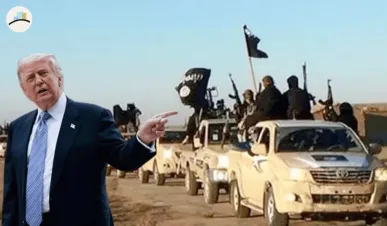
In a dramatic announcement that could reshape the global battlefield against terror, US President Donald Trump has declared that Abu‑Bilal al‑Minuki believed to be the global second‑in‑command of the Islamic State (ISIS) fhas been killed in a joint operation involving American and Nigerian forces in Africa. Trump said al‑Minuki “thought he could hide” on the continent, but a meticulously planned mission tracked him down and eliminated him, significantly weakening ISIS’s leadership structure.
“Tonight, at my direction, brave American forces and the Armed Forces of Nigeria flawlessly executed a meticulously planned and very complex mission to eliminate the most active terrorist in the world from the battlefield. Abu-Bilal al-Minuki, second in command of ISIS…” -… pic.twitter.com/KF8MYet9CB
— The White House (@WhiteHouse) May 16, 2026
What Happened: The Mission and Announcement
Trump revealed the news on his social media platform, Truth Social, stating the operation was “flawlessly executed” under his direction, involving American troops and the Armed Forces of Nigeria. He praised Nigerian collaboration and credited intelligence sources that kept track of al‑Minuki’s movements after he went into hiding.
According to Trump, the mission was “very complex and meticulously planned” a striking example of coordinated counterterrorism efforts. He said al‑Minuki was one of the most active terrorists in the world and had been plotting operations across Africa and potentially against Americans before his elimination.
Who Was Abu‑Bilal al‑Minuki?
Abu‑Bilal al‑Minuki was designated a Specially Designated Global Terrorist by the United States government in 2023 for his deep ties with ISIS structures, particularly ISIS‑West Africa (ISWAP). He was reportedly a Nigerian national who rose through the ranks of ISIS’s international network, playing a strategic role in planning attacks and coordinating militants in the Sahel and Lake Chad regions.
His position made him one of the most wanted figures in global counterterrorism operations, and his reported activities spanned several countries in West and Central Africa. The US had previously carried out airstrikes and military strikes in the region to disrupt extremist operations.
Why This Matters: Blow to ISIS Operations
Trump said al‑Minuki’s death “greatly diminishes” the Islamic State’s global operations, with the leader no longer able to “terrorize the people of Africa or help plan operations to target Americans.” He expressed gratitude to the Nigerian government for their partnership.
Experts say losing a senior operational leader like al‑Minuki could disrupt ISIS’s planning and communications especially in Africa, where evolving offshoots and affiliated factions pose ongoing security threats. However, analysts also note that extremist groups have historically maintained resilience by rapidly replacing leaders when figures are killed. (analysis based on long‑term counterterrorism patterns)
MORE ARTICLES:
Global Reaction and Security Implications
The announcement reverberated across global media and diplomatic channels. Many nations welcomed the news as a success in the broader fight against terrorism, while civil rights groups and some international observers have urged transparency and caution, stressing that leadership decapitation must be paired with long‑term strategies to prevent radicalization. (ongoing reactions tracked as the situation develops)
This operation also highlights expanding U.S. military cooperation with African partners, where extremist groups linked to ISIS, Boko Haram and allied militias have remained active. Strengthened intelligence sharing and joint missions are increasingly central to counterterrorism strategies on the continent.



