
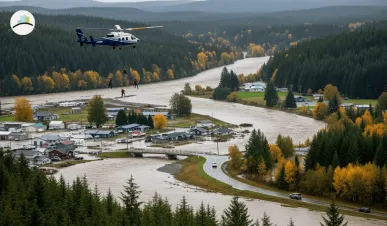
Northern Vancouver Island was struck by a devastating flash flood on October 25, 2025, caused by heavy rainfall and intense storms that swept across the region. In a dramatic rescue operation, eight individuals had to be airlifted to safety after they were trapped by rising waters and mudslides in remote areas. The storm’s strength caught many off guard, causing severe disruptions in the already vulnerable northern communities.
What Triggered the Flash Floods?
The heavy rains, which brought over 100mm of water in a short time, led to flash flooding in previously dry areas. The sudden surge of water overwhelmed local drainage systems, resulting in rising rivers and flooded streets. Several mudslides followed as the saturated ground gave way, further complicating efforts to reach stranded residents.
-
Massive Rainfall: The unexpected downpour, coupled with high winds, caused torrents of water to accumulate quickly in the region.
-
Flooding and Mudslides: The flash floods caused extensive damage, and mudslides blocked roads, trapping people in their homes and properties.
MORE ARTICLES:
The Rescue Operation: Swift Action in Dangerous Conditions
With much of the area rendered inaccessible due to blocked roads, the rescue efforts had to be carried out by helicopter airlifts. Emergency services and the Canadian military coordinated the evacuation of the eight trapped individuals.
-
Helicopter Evacuations: The rescue teams used helicopters to airlift the stranded people, saving them from increasingly dangerous floodwaters and rising mudslides.
-
Medical Assistance: Once evacuated, the victims were taken to shelters where they received necessary medical care and attention.
Despite difficult conditions, the swift and efficient efforts of the emergency responders prevented any fatalities, though the community remains on edge as recovery operations continue.
Impact on Local Communities and Economy
While the immediate danger of the floods has passed, the storm’s effects will linger for some time, affecting the local economy and communities on Vancouver Island.
-
Disruptions to Transportation: With ferry services suspended and roads blocked, residents were unable to travel to and from affected areas, which disrupted daily routines and business operations.
-
Agricultural Setbacks: The floods damaged farmlands, washing away crops and causing economic loss for local farmers.
-
Housing Damage: Many homes were submerged or suffered structural damage, leaving residents in need of emergency housing and financial assistance to recover.
Eight people were rescued after their vehicles became trapped in a landslide on northern Vancouver Island on Thursday evening.https://t.co/XmAhXDXVId
— CHEK News (@CHEK_News) October 24, 2025
How This Affects Future Preparedness
This recent flash flood has highlighted the vulnerabilities of northern Vancouver Island in the face of extreme weather events. With climate change causing more erratic weather patterns, residents and authorities must now reconsider emergency preparedness plans and disaster management systems.
-
Resilience Building: There will likely be an increased focus on flood mitigation strategies, such as better drainage systems and infrastructure designed to withstand heavy rainfalls.
-
Emergency Response Review: The successful airlifts demonstrate the importance of quick-response teams and the need for greater investment in disaster preparedness and rescue equipment.
Key Takeaways
-
Flash Floods: Triggered by heavy rainfall, flash floods caused major disruptions on Vancouver Island.
-
Swift Rescue Efforts: Eight people were airlifted to safety through coordinated helicopter operations.
-
Long-Term Impact: The storm’s aftermath will affect transportation, agriculture, and housing, requiring significant recovery efforts.



