
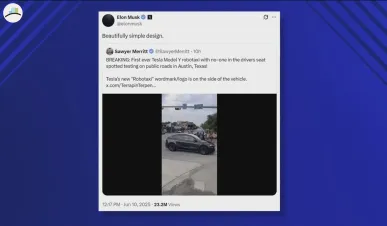
Elon Musk, the man who seemingly runs on pure caffeine and ambition, has thrown another curveball into the world of transportation. He's tentatively scheduled the launch of Tesla's robotaxi service in Austin, Texas, for June 22nd. Tentatively. That word hangs heavy in the air, doesn't it?
This isn't just some small announcement. We're talking about self-driving taxis, the kind of futuristic tech we've only really seen in movies until now. If this actually happens – and that's a big if – it could totally change how we think about getting around.
Honestly, the whole thing feels a little surreal. It’s like that moment when you’re waiting for a package you ordered online and you’re half-expecting the delivery person to be a robot. And now, it's possibly going to be a robotaxi. But is he actually ready?
So, What's the Deal with the Robo-Taxis?
Musk's announcement, dropped seemingly out of nowhere (because, of course, it was), has sent ripples through the tech and transportation worlds. The plan, as far as we understand it – and that's a big "as far as we understand it" – is to launch a limited robotaxi service in Austin initially. Think of it as a beta test, a trial run on a slightly smaller scale, and possibly a whole lot less chaotic than a full-scale global rollout. The choice of Austin is interesting; it's a rapidly growing city with a relatively favorable regulatory climate for autonomous vehicles.
But here's the thing: we still have so many questions. How many cars will be involved? What are the safety protocols? What will the pricing look like? Will people actually use a robotaxi? There’s a lot more than just throwing some self-driving cars onto the streets. It’s a logistical nightmare that I’m guessing few people fully grasp.
This isn’t just about the technology either. We're talking about insurance implications, regulatory hurdles, and public trust—which given the recent controversies, there is a major issue on this front. Will people feel comfortable sitting in a driverless car? The success of this project hinges on all those elements as much as the autonomous driving capabilities themselves. We are certainly watching this closely.
The Skeptic in Me (and Probably Yours Too)
Part of me, the cynical journalist part, finds it hard to completely buy into this June 22nd launch date. Musk has a history of ambitious timelines and, shall we say, optimistic predictions. Remember the Cybertruck? The flamethrowers? The Mars colonization plans? While I truly hope he pulls this off (the robotaxi thing, not the Mars colony just yet), I'm approaching this announcement with a healthy dose of skepticism.
This isn't just about a flashy new product launch. It's about a fundamental shift in how we interact with transportation. It’s going to directly affect employment and potentially many other industries. The ramifications of a successful robotaxi service are huge, both positive and negative. Think about the potential for decreased traffic congestion, improved efficiency, and increased accessibility. But also think about job displacement in the taxi and ride-sharing industries.
Regardless of whether the June 22nd date holds, Tesla’s pursuit of robotaxi technology is definitely a huge development, and this launch, if it happens, will be a major milestone in the field of autonomous driving. I, for one, will be watching (and probably slightly terrified) from the sidelines.
Disclaimer: This article is for informational purposes only and does not constitute financial advice. Investing in any stock, including Tesla, involves risk. Conduct thorough research before making any investment decisions.



