
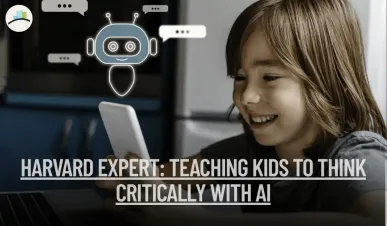
Harvard Educator's Smart Idea: Teaching Kids to Use AI
Okay, so I just got back from this fascinating talk by Dr. Anya Sharma, a Harvard-trained educator. She's been doing some really interesting work on how kids can use artificial intelligence, not just to get things done, but to actually become smarter, more resourceful adults. It wasn't your typical "AI is going to take over the world" doom and gloom stuff. Honestly, it was pretty inspiring. She's got this whole framework she calls "AI-Powered Learning," and the basic idea is pretty straightforward: teach kids how to use AI as a tool, not just treat it as some magic black box. It's about understanding how it works, its limitations, and most importantly, how to use it responsibly and ethically. This isn't just about kids mastering some new tech; it's about building essential critical thinking skills for the future.
Thinking Critically with AI
Dr. Sharma's main point was that AI, for all its power, is just a tool. A really powerful tool, sure, but still just a tool. Think of it like a super-charged calculator or a really advanced research assistant. It can do amazing things, like summarize complex texts in seconds or generate creative writing prompts. But if a kid doesn't understand the process behind these things – if they don't understand what kind of information the AI is using, or how it comes up with its answers – then they're not really learning. She stressed the importance of teaching kids to verify information, to cross-reference AI-generated results with other sources, and to understand the inherent biases that can creep into AI algorithms. This part, I thought, was crucial. It’s not about shunning AI, it’s about understanding it and its potential shortcomings.
Beyond the Buzzwords: Practical Applications
The talk wasn't all theory. Dr. Sharma gave some really practical examples. She mentioned how AI can be used to personalize learning experiences. Imagine an AI tutor that adapts to a child's individual learning style and pace. Or how AI can help kids research topics they're genuinely interested in, offering a wider range of resources than a standard textbook ever could. She also showed some cool apps that are already using these ideas. One example was an app that helps kids learn to code by providing interactive feedback and customized challenges. It's all about making learning more engaging and effective.
- Personalized learning: AI tailors education to individual needs and learning styles.
- Enhanced research capabilities: AI provides access to vast information resources and helps filter relevant data.
- Creative exploration: AI tools stimulate creativity through writing prompts, idea generation, and artistic collaborations.
The Ethical Side of Things
What struck me most, though, was Dr. Sharma’s emphasis on the ethical aspects. She didn't shy away from the potential downsides of AI, highlighting the importance of teaching digital literacy and responsible AI use. Things like understanding the potential for bias in AI algorithms, the impact of misinformation spread through AI-generated content, and the dangers of over-reliance on technology. It was a balanced perspective that acknowledged the incredible potential of AI while also addressing the risks. She stressed that future generations need to be equipped not just to use AI, but to critique it, to think critically about its place in society, and to help shape its development in a positive, ethical way. I honestly felt that was the most important message of her talk.
The Bottom Line
I came away from Dr. Sharma's presentation feeling pretty optimistic, actually. AI isn't some scary monster; it's a tool, and like any tool, its effectiveness depends on the person using it. By teaching kids to use AI responsibly and critically, we can empower them to become more informed, creative, and engaged learners – and, ultimately, smarter adults. It’s not just about keeping up with technology, it’s about understanding its impact and harnessing its potential. And that's a pretty powerful idea.



