
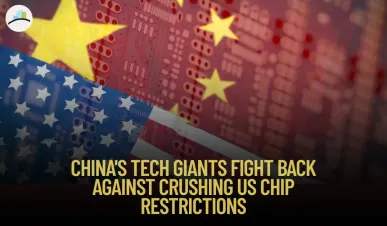
China's Tech Giants: Fighting Back Against US Chip Restrictions
The US is tightening its grip on advanced chip technology, and that's causing some serious ripples in the world of tech, particularly in China. We've seen a flurry of activity from Chinese tech giants lately, all trying to figure out how to navigate these new, incredibly tough restrictions. It's a really fascinating, and frankly, a bit worrying situation. The implications are huge, not just for China, but for the global tech landscape. Honestly, it feels like we're at a turning point, and no one's quite sure where we're headed.
The US government has been cracking down on the export of advanced chips to China, particularly those crucial for artificial intelligence development. This is all part of a broader effort to curb China's technological advancement, for national security reasons, of course. It's a complex issue with lots of different angles, and I'm still trying to fully wrap my head around all the implications myself. But the bottom line is this: it's putting immense pressure on Chinese companies.
How are they coping?
So, how are these Chinese tech giants responding? Well, it's a mixed bag. Some are trying to ramp up domestic chip production. Think of it as trying to build their own supply chains, reducing reliance on foreign technology. This isn’t easy; it requires massive investments and a huge leap in technological capabilities. It's not just about building the chips themselves, either; it's about the entire ecosystem – the design tools, the manufacturing processes, the testing equipment, the whole shebang. It's a monumental task.
Others are focusing on software solutions. If they can't get the hardware they need, they're trying to make their software more efficient, squeezing more out of the chips they *can* get their hands on. This is a more immediate fix, but it’s not a long-term solution. It’s a bit like trying to win a race with a slower car - you can try to drive better, but you might still fall behind. This approach is likely to lead to innovation in software, for sure, but it has its limitations.
The Bigger Picture: Global Implications
What's really striking is the wider impact of all this. This isn't just a China-US issue; it's affecting the global tech supply chain. Companies around the world rely on components and technologies from both countries. The US restrictions are disrupting this carefully balanced system, causing uncertainty and potentially leading to higher prices for consumers everywhere. It’s making a lot of people nervous, from investors to consumers to the companies themselves, you know?
There's also the question of innovation. Will this slowdown in access to the most advanced chips stifle technological progress in China? It's a tough question with no easy answer. While the US aims to hinder progress in certain areas, it might inadvertently force Chinese companies to innovate in unexpected ways. It’s a double-edged sword. We're in uncharted territory here, and only time will tell what the long-term effects will be.
Looking Ahead
This situation is dynamic, and there's no telling how things will play out. The Chinese government is likely to throw its weight behind domestic chip development, and we can expect to see increased investment in research and development. We'll also see plenty of political maneuvering, with negotiations and potentially escalating tensions between the US and China. I suspect this is a story that will continue to unfold for quite some time, with significant implications for the global tech industry and beyond. It’s a complex, multi-layered issue, and it's going to take some time before we fully understand the ramifications.



