
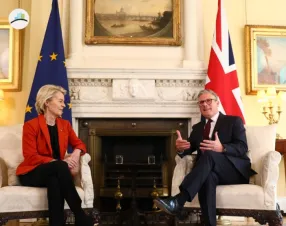
In a major development following years of political friction, the United Kingdom and the European Union have made notable progress toward resetting their relations after Britain’s tumultuous exit from the bloc. On Monday, London became the stage for an important summit where U.K. Prime Minister Keir Starmer welcomed European Commission President Ursula von der Leyen along with senior EU officials. This gathering marked a pivotal moment in navigating the complexities of a new partnership amid a rapidly evolving global landscape.
Key Agreements on Fishing, Energy, and Security
Behind the scenes, diplomatic efforts culminated in agreements that address some of the most sensitive issues dividing the two sides since Brexit. Among the most consequential is a mutual understanding on fishing rights, securing reciprocal access to fishing waters for many years ahead. This issue, which had threatened to derail talks in the past, now seems to have found a workable compromise. Alongside this, the two parties have committed to strengthening collaboration on energy, signaling a shared commitment to navigate global energy challenges together. The summit also concluded with a partnership on security and defense matters — an area where shared interests remain strong, particularly in the face of geopolitical tensions.
A New Focus on Youth Mobility and People-to-People Ties
Perhaps the most promising advancement comes in the realm of youth mobility and people-to-people connections. Recognizing the importance of fostering closer ties among younger generations, the U.K. and EU agreed to explore a “balanced youth experience” program. This initiative aims to enable young people from both sides to work, study, volunteer, and travel freely for limited periods, fostering cultural exchange and deeper understanding. Additionally, discussions are ongoing about the U.K. rejoining the Erasmus+ education program, a key pillar for student exchange that the U.K. had previously left. This move is seen as a potential bridge to rebuilding trust and cooperation in educational and social domains.
The two sides also agreed to intensify cooperation on managing irregular migration — a pressing challenge for many European countries. Measures discussed include sharing best practices and improving border security collaboration. In a nod to travelers, the summit raised the prospect of introducing e-gates for U.K. passport holders at European airports, aiming to ease the often frustrating long queues that have become a post-Brexit reality.
Intense and Emotionally Charged Negotiations
These breakthroughs came after intense, sometimes fraught negotiations. The talks stretched well into the early hours, underscoring the emotional and political weight of the issues at hand. One participant described the final hours as a rollercoaster, filled with sudden shifts and last-minute compromises, illustrating just how delicate the balance was to reach these agreements. Sky News reported on the complexity of these talks, highlighting the political pressure faced by all parties involved.
Global Implications and Strategic Cooperation
Experts have welcomed the outcome, noting that this reset is not just about smoothing bilateral relations but also about strengthening resilience in a world marked by uncertainty. With shifting alliances and ongoing conflicts, particularly the war in Ukraine, a united front on security and energy becomes even more critical. The agreements also pave the way for reducing trade frictions and enhancing cooperation on regulatory issues, which will benefit businesses and citizens alike.
Domestic Political Challenges and Public Opinion
Nonetheless, challenges remain. Prime Minister Starmer has made it clear that any deal will not reverse the fundamental Brexit decisions, such as leaving the customs union and the single market, or restoring freedom of movement. This stance has drawn scrutiny, especially from critics wary that deeper cooperation might erode Brexit’s core objectives. Fishing rights and youth mobility remain thorny issues, emblematic of the delicate task of balancing renewed cooperation with national sovereignty.
The political dimension adds another layer of complexity. Starmer’s government is walking a tightrope, trying to demonstrate progress on the international stage without alienating voters who supported Brexit. According to recent YouGov research, public opinion of the Prime Minister is at a historic low, while Nigel Farage and his Reform UK party have gained traction. This dynamic creates internal pressure, as the government seeks to avoid appearing to backtrack on Brexit promises while engaging constructively with the EU.
Optimism from Leadership and a Path Forward
Despite these hurdles, U.K. Chancellor Rachel Reeves expressed optimism about the summit’s achievements. She described the reset as a milestone, emphasizing that stronger ties with the EU — the U.K.’s closest trading partners — are essential to navigating the changing global economic landscape. She stressed the need to remove barriers to trade and talent movement, recognizing that collaboration is key to national prosperity.
As more details of the agreements come to light, the summit stands as a critical step forward. It reflects a mutual willingness to engage pragmatically and respectfully, signaling a shift toward a more stable and cooperative post-Brexit relationship. This new chapter, while cautious and complex, opens doors to renewed dialogue and shared progress in a world where alliances and partnerships are more vital than ever.



