
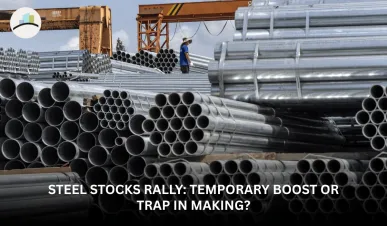
In a volatile trading session on August 1, several key stocks, including Jindal Stainless, JSW Steel, Bharti Hexacom, and HUL, saw action that left traders intrigued and investors split between fear and optimism. While some names surged on technical strength, others are flashing early signs of exhaustion — raising the question: Are we entering a fresh bull phase, or is this just another bull trap?
What's Driving the Steel Surge — And Why It Might Not Last
JSW Steel and Jindal Stainless posted healthy technical breakouts, buoyed by expectations of Chinese stimulus and softening dollar strength. However, this optimism masks deeper issues. The global steel cycle is still shaky, and demand from the infrastructure sector in India has yet to pick up at a pace that justifies aggressive buying.
Also, steel input costs (iron ore, coking coal) are beginning to rise again. This could compress margins in Q2 and Q3 — especially if the monsoon slows down domestic construction activity further. The sector may be staging a technical bounce, but fundamentally, the runway still looks patchy.
Bharti Hexacom: The Quiet Telecom Disruptor?
Bharti Hexacom's sustained uptrend might look like a spillover from the parent Airtel’s strength, but there's more brewing here. The stock’s recent momentum isn’t just about telecom subscriber growth; it's also linked to a quiet reshuffling of telecom tower contracts and regional market share wins in the Northeast.
Insiders point to the company's plans to push fiber-to-home in Tier 3 cities — something that could upset the current Jio-Airtel duopoly. While underreported, this could create pricing pressures by FY26, especially in rural markets.
HUL and FMCG: Defensive Play or Fading Mojo?
Hindustan Unilever (HUL) is back in the spotlight after a modest rebound, but long-term investors should tread with caution. Rural demand — HUL’s bread and butter — remains fragile. Analysts are also concerned about its dependency on volume growth in the face of competition from D2C startups and Patanjali’s aggressive rural pricing.
MORE ARTICLES:
The hidden risk? If HUL fails to modernize its portfolio and pricing architecture, it might face a Kodak moment — not immediately, but sooner than the market expects.
What Is Not Being Talked About Enough
-
Market Rally on Low Volumes: Many of these breakouts are happening on lower-than-average volume — a classic red flag for retail investors chasing short-term momentum.
-
FIIs Are Net Sellers Again: Foreign institutional investors have turned cautious, particularly in midcaps. Yet retail participation is driving euphoria. This divergence historically ends in a correction.
-
China’s Impact Is Overestimated: Much of the steel optimism banks on Chinese stimulus. But repeated failed efforts in the past two years should make investors wary. Dependency on Chinese liquidity to drive Indian steel makes this rally structurally fragile.
Why This Is Important
The current momentum might look like a revival, but hidden under the surface is a market driven by hope, not fundamentals. Retail investors, who are often late entrants, risk getting trapped in trades that have already run their course.
At a broader level, this signals a worrying trend: a market that’s ignoring macro cues like sluggish GST growth, uneven monsoon impact on rural spending, and potential rate hikes by the RBI in response to inflationary pressures.
Fresh Angles Worth Noting
-
Bharti Hexacom may quietly disrupt India’s fiber market
-
Steel stocks could falter if infra push slows post elections
-
HUL's rural playbook is under pressure from new-age rivals
-
Midcap euphoria might mask FII exit signals
-
Breakouts without volume = false hope?
Disclaimer:
This article is intended for informational purposes only and does not constitute investment advice. Procapitas does not provide personalized financial recommendations. Always consult a licensed financial advisor before making investment decisions. Information is based on publicly available sources as of June 2025 and Procapitas’ independent research and analysis.



