
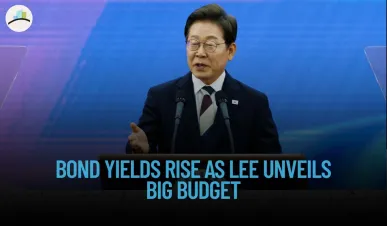
South Korea’s bond market is facing renewed pressure as President Lee Jae-myung’s new administration signals plans for aggressive government spending. The proposal includes a supplementary budget exceeding 10 trillion won (approx. $7.3 billion), which has sparked investor concerns about an uptick in sovereign debt and rising bond yields.
More Articles:
Expansionary Budget Sparks Investor Caution
The Lee administration is prioritizing economic stimulus through broader fiscal measures aimed at reviving growth. This includes increased spending on public projects and disaster relief. While the intent is to boost consumption and reduce income disparity, bond investors worry the expanded budget will lead to heavier bond issuance and increased long-term borrowing costs.
Rising Yields Reflect Market Anxiety
In reaction to the spending plans, yields on Korean government bonds, particularly the 3-year and 10-year issues, have climbed notably. The sharp rise reflects growing market skepticism about fiscal discipline, with traders pricing in higher risk and inflation expectations tied to increased supply.
Government Tries to Calm Market Nerves
To offset the volatility, South Korea’s Ministry of Economy and Finance is reportedly weighing intervention strategies, such as expanding its bond stabilization fund and enhancing liquidity mechanisms for institutional buyers. Despite these efforts, investor uncertainty around the long-term economic impact persists.
South Korean bonds are facing tougher times ahead, as concerns grow that the country’s left-leaning new president will usher in an era of fiscal expansion accompanied by rising government debt https://t.co/lwZMABMz4S
— Bloomberg (@business) June 4, 2025
Policy Versus Markets: The Ongoing Balancing Act
While the government remains committed to supporting economic equity and infrastructure modernization, it faces mounting pressure from financial markets to demonstrate fiscal restraint. Observers note that managing this tension will be a key challenge for the new administration moving forward.
Disclaimer:
This report is based on publicly available government and market data as of June 4, 2025. It has been independently compiled by Procapitas News to ensure originality and editorial clarity.
Source:
Bloomberg - South Korean Bonds Pressured by Lee’s Agenda for Fiscal Spending.



