
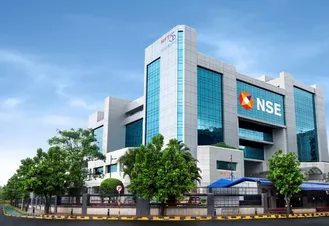
The National Stock Exchange (NSE) modified its procedure for dealing with corporate actions including demergers, allowing demerged companies or entities to stay in the index. The move would be applicable to all schemes of arrangement including demerger that are approved by shareholders in equity of respective firms after the last day of April 2023, according to a release from the National Stock Exchange on the 27th of April.
On the 18th of October in 2022, the National Stock Exchange (NSE) issued a market discussion record on the topic of mergers and demergers in the Nifty equity indexes. Based on inputs from market players, the Index Management Sub-Committee (Equity) of the National Stock Exchange announced a tweak in the methodology of the Nifty equity indices for the consideration of mergers on the 18th of November.
Currently, the demerged firm is removed from the index and replaced by another qualifying stock as soon as shareholders with equity approve the method of arrangement for a business's demerger (in the case of indices with a fixed number of members). Furthermore, after shareholder approval, a demerged firm is removed from the index without a replacement. (In the case of indices with varying constituent counts). If a demerged company is a participant of an index on which Futures and Options are traded at the NSE, changes are made available to market users four weeks before the index restoration date.
The new approach, on the other hand, allows the spun-off company/entity to be incorporated into the index at an unchanged price if the stock exchange holds a special pre-open session. "The spun-off business/entity shall be added to the index at the constant price (which is the difference between the demerged company's closing price on T-1 day wherein T is the Ex. Demerger date and price derived during Special Pre-Open session (SPOS) on the Ex. Demerger date," according to the National Securities Exchange.
The newly listed company, according to the NSE, will be withdrawn from the index shortly after the end of the day (EOD) on the third day of its list.
"If the spun-off business/entity touches the price band on both of the days during the initial two days of those three days, the exclusion date will be delayed by another three days." After two consecutive days of the spun-off business/entity failing to hit the price band, such spun-off business/entity shall be removed after the third trading day of such failure. If, on the third day, the spun-off business/entity returns to the price band, the exclusion of such stock will no longer be postponed," the National Stock Exchange (NSE) says.
"If the Exchange does not hold a Special Pre-Open session, the demerged business will be eliminated from the index at the beginning of T-1 day close of Ex.-2, where T day is the Ex. date for demerger of stock to create a suitable replacement in the case of indices with a preset number of companies." In the case of indices with a fluctuating number of companies, no replacement (inclusion) will be made," they says. As per the National Stock Exchange (NSE), the improved approach is designed to assist reduce churning in index members caused by business actions like as demergers.
Many organizations that are trying to demerge their companies into independent entities would benefit from the change. Reliance Industries, led by Mukesh Ambani, stated last year that it will demerge its banking and financial services division into Reliance Strategic Investments Ltd (RSIL), which will be Jio Financial Services Ltd. (JFS). As per to the firm, Jio Financial Services would be listed on Indian stock exchanges (NSE). Last month, Haldiram Group, one of the the nation's biggest snack and sweet makers, declared the merger of its FMCG businesses Haldiram Snacks and Haldiram Foods into Haldiram Snacks Food.



