
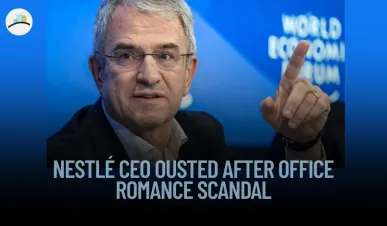
Nestlé’s executive suite saw a swift shakeup this week with the abrupt termination of CEO Laurent Freixe. The reason? An internal investigation confirmed Freixe had been involved in a romantic relationship with a subordinate—one he failed to disclose to the board, violating the company’s internal code of conduct.
The multinational food and beverage giant didn’t mince words in its response. The board, led by Chairman Paul Bulcke and overseen by lead independent director Pablo Isla, acted decisively following two stages of investigation. Initially, Freixe denied the relationship. But the board pushed for a second probe—this time involving external legal counsel—which substantiated the allegations. With trust broken, Freixe was removed without severance.
This is not merely a case of a personal indiscretion—it’s an institutional test of ethics, oversight, and the power dynamics embedded in executive leadership.
The Real Risk: Three CEOs in Just Over a Year
For investors and analysts alike, the firing of Freixe represents something deeper than an isolated compliance breach—it’s a flashing warning light about continuity at the top. Since the surprise departure of former CEO Mark Schneider last year, Nestlé has now cycled through three different CEOs within a span of just over twelve months.
That pace of turnover is rare for a $300+ billion company and could have long-term ramifications. Leadership transitions—especially abrupt ones—carry both financial and reputational risks. Internal teams are forced into reactive mode, and strategic initiatives can get paused or diluted.
Behind the scenes, some industry watchers believe Nestlé may be struggling with succession planning discipline, especially as corporate culture becomes more complex to navigate amid evolving social norms and stakeholder expectations.
MORE ARTICLES:
Whistleblower Systems Work—But Are They Enough?
According to people familiar with the case, the first hints of Freixe’s inappropriate conduct came via Nestlé’s internal whistleblower hotline. That mechanism, often seen as a checkbox in many corporate compliance programs, turned out to be pivotal. The initial probe didn’t uncover conclusive evidence. But the board escalated it to a second review with outside counsel, leading to Freixe’s ouster.
The takeaway? Nestlé's internal governance architecture appears functional—but just barely. It took two separate investigations to confirm facts that should’ve been disclosed upfront. The board’s willingness to override initial findings signals a maturing attitude toward ethical leadership, but also exposes a gap in real-time transparency at the highest level.
Boards across the Fortune 500 are watching closely. This may set a precedent for how companies handle workplace power imbalances, even when they involve high-ranking individuals.
The New Face of Nestlé: Philipp Navratil Steps Into the Spotlight
Following Freixe’s exit, Nestlé moved quickly to install Philipp Navratil as CEO. A 24-year veteran of the company, Navratil previously led Nestlé’s premium coffee brand, Nespresso. He’s widely respected internally for being both a strategic thinker and a steady operator—two traits the board will now lean heavily on.
Unlike Freixe, who was perceived as more externally focused and media-facing, Navratil is known for a quieter leadership style grounded in operational execution. His appointment is being read as a “back-to-basics” move aimed at stabilizing internal morale and regaining investor trust.
Still, with the company facing increasing margin pressures, and major competition emerging from a newly announced Keurig–JDE Peet’s merger, Navratil will have little time to ease into the role.
Investor Anxiety Grows Amid Competitive and Structural Pressures
While Nestlé emphasized that its “strategic priorities remain unchanged,” the market is less certain. Shares are down nearly 17% year-over-year, reflecting not only concerns around leadership churn but also broader challenges—from global trade tensions to supply chain dislocations.
Analysts are also wary of Nestlé’s competitive positioning. In coffee, a historically high-margin product category, the company now faces rising pressure from consolidation in the North American market. The Keurig–Peet’s mega-merger signals an intensification of retail shelf wars, pricing pressures, and brand battles.
Navratil will not only need to rebuild internal leadership credibility—he must also engineer a more defensible competitive moat in an increasingly commoditized global food industry.
Swiss food giant Nestlé said Monday it dismissed its CEO Laurent Freixe due to an inappropriate relationship with a subordinate. https://t.co/exVoqOPckt
— KOAA News5 (@KOAA) September 2, 2025
Deeper Implications for Corporate Governance Across Global Firms
What makes this episode notable isn’t just the firing of a CEO over personal misconduct. It’s how it underscores a deeper cultural shift happening across large organizations—especially those with global footprints.
Power dynamics between executives and subordinates are no longer seen as private matters. Investors, employees, and regulators now expect proactive governance, not reactive apologies. Companies that fail to enforce internal codes—even at the C-suite level—risk long-term reputational erosion.
The board’s willingness to fire Freixe without severance sends a message that ethics are non-negotiable, no matter the executive’s stature. That may serve Nestlé well in the long term—but it will also raise expectations for how it handles future crises.
Disclaimer:
This article is for informational purposes only and does not constitute investment advice or a recommendation to buy or sell any securities. Procapitas does not provide personalized financial advice. All investment decisions should be made in consultation with a licensed financial advisor. The information presented is based on publicly available sources and Procapitas’ independent research and analysis, which are believed to be reliable but are not guaranteed for accuracy or completeness.



