
Surge in Margin Trading Amid Market Optimism
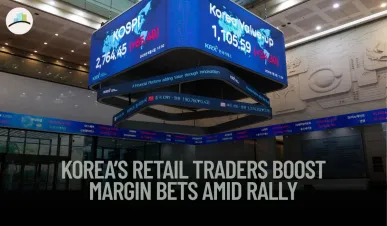
South Korea has witnessed a significant increase in margin trading activity among retail investors, driven by renewed optimism in the country’s stock market. Following the recent election of a market-friendly president and promises of economic reforms, the KOSPI index has rallied strongly, encouraging individual investors to increase their use of leverage to amplify potential gains. This surge reflects a broader shift in investor behavior, where retail participants are more willing to take on higher risk exposure in hopes of achieving outsized returns. The increasing popularity of margin trading is reshaping the retail investment landscape in South Korea, highlighting both the growing confidence and potential vulnerabilities of these investors.
More Articles:
The Role of Short-Selling Resumption
In March 2025, South Korea lifted a 17-month ban on short-selling that had been imposed to curb excessive market volatility during uncertain economic times. This resumption of short-selling has been welcomed by institutional and global investors who see it as a sign of maturation and improved market functioning. It has also enhanced market liquidity and contributed to South Korea’s efforts to gain a developed market status from MSCI, an important benchmark for international investors. However, the return of short-selling also introduces complexities that retail investors may find challenging to navigate, potentially increasing their exposure to risks if not properly managed.
Risks Associated with Leveraged Investments
Alongside margin trading, leveraged exchange-traded funds (ETFs) have surged in popularity among South Korean retail investors. Leveraged ETFs magnify returns by using financial derivatives and debt, which can significantly amplify both gains and losses. Recent global corrections in technology stocks have exposed many retail investors to sharp losses, as leveraged positions intensified market downturns. This vulnerability has raised concerns among regulators, prompting the Financial Services Commission to implement tighter controls on the sale of structured products to retail clients. These regulatory changes aim to protect investors from excessive risk-taking and mitigate potential systemic risks in the financial market.
Government Measures to Stabilize the Market
The South Korean government has taken proactive steps to address market volatility and sustain investor confidence. It announced a substantial market stabilization fund worth 40 trillion won (approximately $28.35 billion), aimed at supporting the stock market amid ongoing geopolitical tensions and domestic political uncertainties. This fund serves as a financial backstop to prevent disorderly market sell-offs and provides reassurance to both domestic and foreign investors. The government’s intervention reflects its broader commitment to maintaining market stability as South Korea navigates the challenges of integrating more deeply into global capital markets.
Outlook: Balancing Risk and Reward
The recent surge in margin trading highlights the dynamism of South Korea’s retail investor community but also underscores the need for balanced risk management and investor education. As South Korea seeks to elevate its financial markets to developed status and attract sustained global investment, regulators and market participants must ensure that growth is sustainable and investor protections are robust. Encouraging prudent use of leverage, enhancing transparency around complex financial products, and fostering financial literacy will be critical to managing the dual goals of market innovation and investor safety. The path forward will require careful calibration between opportunity and caution to sustain long-term market health.
Disclaimer:
This article is intended for informational purposes only and does not constitute investment advice. Procapitas does not provide personalized financial recommendations. Always consult a licensed financial advisor before making investment decisions. Information is based on publicly available sources as of June 2025 and Procapitas’ independent research and analysis.



