
Deal Overview
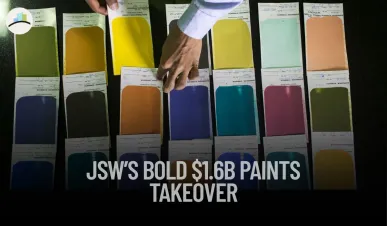
In a major shake-up in the Indian paints industry, JSW Paints has entered into a definitive agreement to acquire a 74.76% stake in Akzo Nobel India from its Dutch parent, Akzo Nobel NV. The deal is estimated at ₹12,000 crore (approximately USD 1.6 billion), making it one of the most significant M&A moves in the consumer-industrial space in recent years. This acquisition positions JSW as a formidable challenger to the likes of Asian Paints and Berger Paints and transforms its market presence overnight.
JSW Paints, part of the diversified JSW Group, will acquire the controlling stake and make an open offer for the remaining shares as per regulatory norms. With this transaction, JSW Paints moves from a marginal player to a serious contender in both the decorative and industrial coatings segments.
More Articles:
Strategic Rationale
Instant Market Scale and Brand Access
The acquisition gives JSW immediate access to Akzo Nobel’s well-established premium portfolio, particularly the Dulux brand, which enjoys significant brand equity in urban and semi-urban India. Dulux's strength lies in its premium positioning, aspirational branding, and strong distribution in high-value markets, where JSW has had limited presence so far.
JSW Paints will leapfrog in terms of scale, emerging as the fourth-largest player in India’s decorative paints segment and the second-largest in the industrial coatings segment. The acquisition is expected to substantially increase its market share from less than 2% to over 10%.
Synergy Potential
The potential for synergies is considerable. Akzo’s distribution strength, R&D capabilities, and brand positioning will integrate with JSW’s expansive manufacturing ecosystem, low-cost sourcing, and capital strength. Combining Akzo’s premium products with JSW’s access to raw materials and infrastructure logistics will likely result in operational efficiencies, cost advantages, and higher EBITDA margins.
Additionally, JSW’s reach in steel, cement, infrastructure, and energy sectors opens up cross-selling opportunities for Akzo's industrial coatings—particularly in protective, coil, and marine coatings.
Competitive Advantage and Industry Realignment
The Indian paint industry has seen increased competition with the entry of Grasim Industries’ Birla Opus, JK Cement’s expansion in the paints business, and niche brands like Indigo Paints targeting aspirational consumers. This acquisition is a defensive and offensive play—shielding JSW from being overshadowed in a maturing market while giving it the arsenal to take on incumbents in both price-sensitive and premium segments.
Deal Economics and Funding Structure
Valuation & Pricing Strategy
The acquisition is structured at a valuation that reflects a 5-8% discount to Akzo Nobel India's listed valuation of approximately ₹15,800 crore. This reflects not only negotiation leverage but also the buyer’s cautious optimism amid changing market dynamics.
Financing Mix
JSW is financing the deal through a mix of equity and debt:
-
Approximately ₹2,000–3,000 crore is expected to be raised through equity pledges by the JSW family promoters.
-
The remaining is expected to be financed through a mix of bank debt and mezzanine capital. Banks such as Morgan Stanley, Standard Chartered, and MUFG are reportedly backing the loan component.
-
Global investors like Ares, KKR, and Farallon are expected to participate through hybrid or mezzanine structures.
-
Additional liquidity was raised via promoter stake sales, including a ₹1,210 crore block deal in JSW Infrastructure to Singapore’s sovereign fund.
This mix provides sufficient firepower while mitigating equity dilution, though it does elevate JSW’s overall group leverage temporarily.
Broader Implications and Long-Term Impact
Strengthening Industrial Portfolio
JSW will now control a portfolio that includes not only consumer paints but also high-performance industrial coatings. This aligns closely with its steel, cement, ports, and infrastructure verticals, offering a vertically integrated ecosystem advantage.
Akzo Nobel India’s industrial coatings business spans automotive OEMs, powder coatings, and marine coatings—markets that JSW can now more aggressively pursue. These high-tech, higher-margin businesses require technical expertise and global best practices, which Akzo already brings.
Entry into the Premium Consumer Segment
For JSW Paints, which had been largely a mid-market player with regional strongholds in southern and western India, this deal provides a vital foothold in the metro and tier-1 markets with an established brand. Dulux, with a 90-year history in India, provides the branding muscle that JSW previously lacked.
IPO Readiness and Capital Market Strategy
With the combined entity expected to cross ₹10,000 crore in annual revenue over the next two years, the stage is being set for a high-profile IPO of JSW Paints. The acquisition improves scale, profit visibility, and brand recognition—key elements that institutional investors look for in a consumer-facing business IPO.
This IPO, likely to be positioned as a consumer-industrial hybrid play, will help JSW unlock shareholder value and de-leverage post-deal.
Risks and Red Flags
| Risk Factor | Explanation |
|---|---|
| Integration Risk | Integrating workforce, manufacturing systems, supply chains, and brand strategy could prove operationally complex. Cultural and procedural mismatches may hinder synergy realization. |
| Earnings Pressure | Akzo Nobel India's Q3 FY25 profits declined 5% year-over-year, partly due to the recent divestment of its powder coatings business, which accounted for 12–14% of sales. JSW will need to stem the slide and improve margins. |
| Debt Exposure | The acquisition is largely debt-financed. If synergies or growth expectations fall short, JSW Group’s consolidated debt ratios could come under pressure, impacting future borrowing capacity. |
| Regulatory Hurdles | The deal requires clearance from the Competition Commission of India and approval from minority shareholders. There may also be regulatory scrutiny given the size and sector concentration. |
JSW agrees to buy up to 75% of Akzo Nobel’s Indian business in a $1.6 billion deal https://t.co/W202FmRjsO
— P. R. Sanjai (@talktosanjai) June 27, 2025
Procapitas Outlook and Strategic Forecast
JSW Paints has executed a bold and transformative move that will reshape its future. With Akzo Nobel India under its belt, the company transitions from a regional challenger to a national contender. Its new footprint spans urban, semi-urban, consumer, and industrial domains.
Expect aggressive integration efforts in FY26, followed by a pivot toward IPO preparation in FY27. If managed efficiently, the acquisition will help JSW Paints leap from obscurity to industry leadership within a decade.
Disclaimer:
This article is intended for informational purposes only and does not constitute investment advice. Procapitas does not provide personalized financial recommendations. Always consult a licensed financial advisor before making investment decisions. Information is based on publicly available sources as of June 2025 and Procapitas’ independent research and analysis.



