
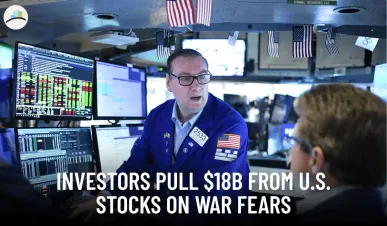
In the week ending June 18, U.S. equity funds saw their largest weekly outflows in three months, losing a startling $18.4 billion—a dramatic effect of escalating Israel–Iran tensions and mounting tariff unease. This movement reflects more than market jitters—it signals a strategic repositioning amid global instability.
🔍 Why This Is Happening
-
Geopolitical Fear Trumps Optimism: As diplomatic efforts stall, investors are exiting large-cap stocks, traditionally seen as safe-bet blue-chips, indicating an elevated risk aversion not just in small or speculative segments.
-
Tariff Anxiety Holds Firm: Beyond conflict, the specter of renewed U.S. trade tariffs—often overshadowed by political changes—is resurfacing as a credible headwind, stalling forward-looking equity investments.
-
Hungry for Defense & Tech: Despite pullbacks, sectoral funds attracted fresh capital—especially in technology and industrials—suggesting pockets of investor conviction in innovation and defense resilience.
More Article:
SoftBank’s $1 TAI Hub: U.S. Mega‑Project AmbitionsIsrael-Iran Conflict Driving Market Volatility: How It Affects Oil Prices and Investor Sentiment
🔍 What’s Not Being Discussed Enough
-
Systemic Liquidity Shift: With U.S. bond and money-market inflows tepid, this isn’t a rotation—it’s a partial retreat. Cash is leaching out of the system, reducing liquidity and possibly steepening equity drawdowns ahead.
-
Vigilance Over Cross-Asset Risk Behavior: Traditional market correlations are fracturing. Equities fall, bonds don’t rally, money markets dry up. This "risk-asset decoupling" hints at confusion—not calm.
-
Emerging Market Opportunities: Global equity outflows were universal but not uniform. Europe saw modest inflows. This imbalance may present relative value in international equity classes overlooked during U.S. paralysis.
🧾 Hidden Risks & Revealed Opportunities
-
Inflation Shockfront: Oil is already up ~20% in June. If the Middle East conflict escalates further, supply risk could pierce global stability, pushing inflation well beyond current central bank projections.
-
Fed Policy Conundrum: With risk premiums rising, the Fed may hesitate on rate cuts, or even re-hawk—leaving long-duration bonds vulnerable if growth begins to falter.
-
Opportunistic Defense & Tech Islands: Investors continue to pour into industrial and technology funds, expecting resilient earnings and government support—especially in semiconductors, cybersecurity, and aerospace.
🕰 Historical Parallels & Expert Outlook
This flow pattern echoes the 1990 Gulf War withdrawal, when capital fled equities but eventually found refuge, later returning ahead of broader sentiment shifts. However, today’s divergent asset class behavior may delay the return to equilibrium.
Citigroup and RBC sell-side analysts remain cautiously optimistic, warning that markets could still face a 6–20% correction if conflict broadens or oil spikes materially beyond $80–100.
🏁 Why This Matters
-
It’s a key early indicator of a prolonged risk-off shift, not just a knee-jerk event.
-
It signals markets recalibrating around both geopolitical uncertainties and policy disruptions.
-
It highlights where investors still see value: tech and industrials, while prudently sidestepping financials and speculative sectors.



