
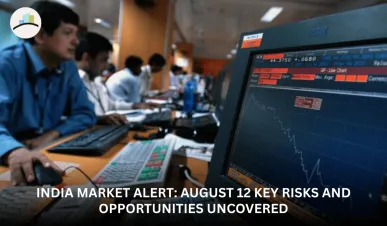
India’s Market at a Tipping Point: What August 12 Signals for Investors and the Economy
As the markets prepare to open on August 12, investors are positioned at a crucial juncture shaped by a convergence of domestic and global forces that could define market trajectories in the coming weeks. This day is more than a routine trading session—it reflects deeper structural themes and emerging risks that demand careful attention.
Why August 12 matters now
August 12 marks a moment where multiple narratives intersect: global central banks' cautious policy moves, mixed corporate earnings, and volatile commodity prices. These factors collectively create a backdrop of uncertainty for India’s equity markets, which have recently shown signs of vulnerability despite earlier resilience. The benchmark indices are testing key support levels, reflecting investor anxiety about macroeconomic headwinds such as inflation persistence and slowing growth.
The under-discussed tensions beneath market movements
While analysts often highlight immediate price actions and quarterly earnings, less focus is given to underlying liquidity flows and sector rotation within the market. There is a subtle but critical shift from growth-oriented, high-valuation sectors toward value and cyclical stocks, signaling changing investor sentiment about where sustainable profits will emerge. Additionally, foreign institutional investors’ (FIIs) fluctuating buying patterns are causing intermittent volatility, underscoring India’s sensitivity to global capital trends.
Economic and business implications
India’s market movements on August 12 could foreshadow broader economic outcomes. Persistent inflation and interest rate pressures may dampen consumer demand, impacting sectors like FMCG and automobiles, which traditionally drive domestic growth. Conversely, infrastructure and capital goods sectors might gain traction amid government spending initiatives, presenting pockets of opportunity. Moreover, volatility in commodity prices, especially crude oil, continues to pose inflation risks that could complicate the Reserve Bank of India’s policy decisions.
More Articles:
Political stakes and policy reflections
This juncture also places pressure on policymakers to calibrate interventions carefully. Political stability and economic reforms remain vital for market confidence. However, rising fiscal deficits or missteps in inflation control could undermine sentiment. In this context, the interplay between the government’s fiscal management and RBI’s monetary policy stance is crucial, with any discord potentially unsettling markets further.
Historical parallels and lessons
Looking back, markets have often reacted sharply at similar inflection points where inflation fears, global uncertainty, and domestic policy shifts coincide. The 2013 “taper tantrum” episode is instructive—sudden shifts in global liquidity and rising rates rattled emerging markets including India, causing capital outflows and currency depreciation. While today’s circumstances differ, the lesson remains: markets thrive on clarity and predictable policy frameworks, and uncertainty can amplify downside risks disproportionately.
Hidden risks and emerging opportunities
One hidden risk is the potential for tightening global financial conditions to exacerbate currency pressures and capital outflows, impacting India’s external stability. On the flip side, ongoing structural reforms, digital economy growth, and green energy investments offer long-term growth avenues that savvy investors can target amid short-term volatility.
Why investors should care
The trading setup on August 12 is not just a snapshot of market mood—it is a litmus test for India’s economic resilience and policy effectiveness in a challenging global environment. Understanding the nuanced interplay of domestic and international factors can help investors anticipate shifts before they fully materialize in prices, enabling smarter, more strategic decisions.
Disclaimer:
This article is intended for informational purposes only and does not constitute investment advice. Procapitas does not provide personalized financial recommendations. Always consult a licensed financial advisor before making investment decisions. Information is based on publicly available sources as of June 2025 and Procapitas’ independent research and analysis.



