
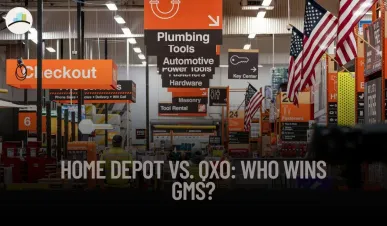
Home Depot Makes Strategic Play for GMS Amid QXO’s Hostile Takeover Attempt
Home Depot has stepped into the acquisition race for GMS Inc., a $5 billion distributor of building materials, throwing a direct challenge to QXO Inc.'s unsolicited offer. According to sources familiar with the matter, the retail giant has made a confidential approach to GMS, seeking to outmaneuver QXO's $95.20 per share bid.
This surprise move adds serious heat to what was initially expected to be a straightforward acquisition led by QXO, the publicly traded vehicle spearheaded by serial dealmaker Brad Jacobs. While QXO is pushing for a swift acquisition, Home Depot’s potential counteroffer could prolong negotiations and significantly increase GMS’s valuation.
More Articles:
Understanding Home Depot’s Strategic Intent: A Pro Market Power Grab
Home Depot’s renewed appetite for M&A signals a sharpening focus on the professional contractor market, an area where margins are higher and loyalty is deeper. GMS offers exactly the kind of network, service capabilities, and distribution scale that can help Home Depot deepen its contractor-centric moat.
GMS operates over 320 distribution centers across North America and close to 100 tool rental and service locations. These are highly complementary to Home Depot’s supply chain and contractor support services. If integrated correctly, this deal could help the company accelerate its dominance in specialty building products, wallboard, ceiling systems, insulation, and steel framing.
This move also echoes Home Depot's prior acquisitions — particularly HD Supply and SRS Distribution — all of which have tightened its grip over the fragmented contractor market. The acquisition of GMS would be a logical extension of that strategy, allowing the company to further consolidate inventory, logistics, and service delivery.
What’s at Stake: Beyond Price, It’s About Platform Power
Although QXO’s offer of $95.20 per share was already a premium to GMS’s trading price, Home Depot brings something different to the table — operational synergy, digital scale, and market reputation. This is not merely a numbers game; it’s about who can use GMS more effectively.
Home Depot’s deeper integration with AI-driven logistics, generative AI for contractor engagement, and its expansive product database makes the value proposition for GMS’s board a bit more strategic than QXO’s largely financial-based pitch.
Moreover, GMS shareholders may perceive Home Depot’s offer — if formalized — as more stable and less speculative. QXO is still a relatively young venture, despite Jacobs’ strong track record. For GMS’s board, the difference between private-equity style turnaround execution and an established corporate juggernaut may weigh heavily in negotiations.
QXO’s Hostile Timeline: Pressure Is On
QXO has given GMS until June 24 to respond to its offer and is reportedly prepared to go hostile if ignored. Brad Jacobs, the architect of multi-billion-dollar rollups like XPO Logistics and United Rentals, is looking to replicate that model through QXO. A GMS acquisition is viewed internally as the foundational “anchor platform” around which QXO can build a multi-vertical industrial empire.
However, Home Depot’s entrance has thrown a wrench into that narrative. Not only does it potentially inflate the cost of acquisition, but it also introduces execution risk — if GMS's board stalls or rejects QXO’s bid in favor of exploring Home Depot’s terms.
Should QXO proceed with a hostile takeover, it would need to convince shareholders that it can manage GMS’s operations better and faster than Home Depot, despite having no established operational infrastructure yet.
Procapitas Insight: Strategic Value Creation Beyond the Obvious
Several nuanced elements make this battle for GMS particularly compelling:
-
Market Synergy Overlap: GMS gives Home Depot last-mile distribution reach in secondary metro areas where its physical footprint is thinner. This could translate into shorter contractor delivery times — a make-or-break factor in jobsite loyalty.
-
Margin Enhancement: Consolidating logistics and procurement with GMS could raise Home Depot’s gross margin in specialty products, creating scale benefits even without major store overlap.
-
Regulatory Risk Assessment: The combined scale of Home Depot, SRS, and GMS may spark antitrust review. However, the fragmented nature of building products distribution — dominated by regional and independent players — may help alleviate scrutiny.
-
Contractor Trust and Brand Equity: Unlike QXO, which would need to build operational credibility from scratch, Home Depot already has deep relationships with contractor networks. This "trust capital" cannot be underestimated.
-
Talent and Culture Integration: If Home Depot underestimates the importance of GMS’s independent, service-first culture, it could erode customer loyalty. On the other hand, QXO might offer more cultural preservation but with execution risk.
#Noticias del mercado de insumos de contrucción
— HHC (Col) Estrategia y finanzas (@hhc_global) June 20, 2025
La oferta de Home Depot por el distribuidor GMS inicia batalla por empresa de productos de construcción de USD 5 mil millones. Oferta no solicitada del negociador Brad Jacobshttps://t.co/eVcZ4WBS0C pic.twitter.com/DlalmPGk2i
Looking Ahead: Timeline, Triggers, and Market Signals
The next critical date is June 24, when GMS’s board must formally respond to QXO’s offer. If Home Depot decides to publicize or enhance its bid by then, it could trigger a formal bidding war.
Investors will be watching for:
-
GMS’s board recommendation and valuation logic
-
Any regulatory commentary from the FTC or DOJ
-
Shareholder activist positioning (especially if proxy fights emerge)
-
Market re-pricing of GMS stock toward either bidder’s premium
If GMS accepts a higher or more strategic bid from Home Depot, it may signal a wider wave of consolidation in the fragmented industrial distribution sector — especially among companies that serve pro contractors in infrastructure, residential building, and commercial construction.
Disclaimer:
This article is intended for informational purposes only and does not constitute investment advice. Procapitas does not provide personalized financial recommendations. Always consult a licensed financial advisor before making investment decisions. Information is based on publicly available sources as of June 2025 and Procapitas’ independent research and analysis.



