
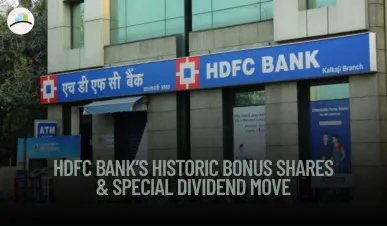
HDFC Bank is scheduled to hold a board meeting on July 19, 2025, to review its June quarter results and deliberate on issuing its first-ever bonus shares along with a special interim dividend. This development represents a significant shift in the bank’s capital allocation strategy, moving beyond traditional profit reinvestment towards directly rewarding shareholders with enhanced returns.
This potential bonus share issuance marks an important milestone in HDFC Bank’s nearly three-decade history. It reflects the bank’s confidence in its robust capital position following the landmark merger with HDFC Ltd and signals a new chapter in investor relations aimed at bolstering shareholder value.
More Articles:
What Bonus Shares Are and Their Significance
Bonus shares are additional shares distributed to existing shareholders free of cost, usually funded from the company’s free reserves or retained earnings. Unlike a cash dividend, bonus shares increase the total number of shares held, improving liquidity and broadening share ownership without requiring investors to invest additional capital.
However, the issuance of bonus shares typically results in a proportional decrease in the market price per share, maintaining the overall market capitalization. For shareholders, the key benefit lies in receiving more shares which can enhance trading flexibility and potentially boost future returns.
For HDFC Bank, issuing bonus shares signals a strong financial foundation and ample capital buffers, especially critical in a banking environment that demands rigorous capital adequacy and growth funding.
Strategic Timing of the Bonus Issue
The timing of this potential bonus share issuance is strategic. The bank reported solid financial performance for fiscal year 2025, including approximately 10.7% growth in net profit and a 13% increase in net interest income. Deposits have outpaced loan growth, indicating strong balance sheet health and capital surplus.
The consolidated entity, formed from the merger of HDFC Ltd and HDFC Bank, is now well positioned to reward shareholders without compromising on future growth initiatives or regulatory requirements.
By announcing the bonus shares alongside a special dividend, HDFC Bank aims to balance capital appreciation opportunities with direct cash returns, appealing to a broad spectrum of investors.
Market Reaction and Outlook
Following the news of the board meeting and potential shareholder rewards, HDFC Bank’s shares rallied modestly, reaching near all-time highs. Market analysts interpret this reaction as anticipation of a positive surprise for investors, reinforcing confidence in the bank’s growth trajectory and capital management discipline.
The actual impact on share price and investor returns will depend on the final bonus share ratio and the size of the special dividend, both expected to be announced after the board meeting. A generous bonus issue, combined with a meaningful dividend payout, could further enhance the stock’s attractiveness among retail and institutional investors alike.
Implications for Investors and the Banking Sector
-
Increased Retail Participation: Bonus shares typically lower the effective price per share, making the stock more accessible to retail investors, potentially widening the shareholder base.
-
Improved Liquidity: The increase in the number of shares outstanding can enhance market liquidity and trading volumes, reducing price volatility.
-
Valuation Impact: While earnings per share (EPS) metrics adjust downward after a bonus issue, the enhanced yield and liquidity often support sustained valuation levels.
-
Competitive Benchmark: This move may prompt peer banks to re-evaluate their own shareholder return policies, intensifying competition in the banking sector for investor capital.
-
Macroeconomic Context: Amid evolving monetary policies and inflation trends, such shareholder-friendly measures help maintain investor confidence in the financial sector.
Disclaimer:
This article is intended for informational purposes only and does not constitute investment advice. Procapitas does not provide personalized financial recommendations. Always consult a licensed financial advisor before making investment decisions. Information is based on publicly available sources as of June 2025 and Procapitas’ independent research and analysis.



