
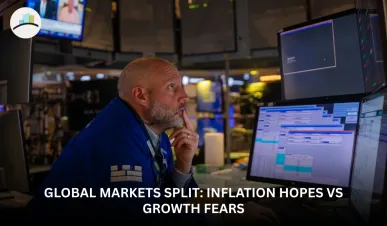
Global Markets Send Mixed Signals: Why Today Could Be Pivotal for Traders
Global markets entered the new trading day with a cocktail of caution and calculated optimism. US indices ended marginally higher after a volatile session, European equities slipped amid mixed earnings, and Asian markets opened unevenly. Beneath the noise lies a deeper truth: markets are wrestling with a tug-of-war between cooling inflation narratives and lingering growth fears.
Why This Is Happening Now
Recent data out of the US shows slowing inflation, which initially cheered equity markets, but the optimism is being capped by concerns that the Federal Reserve may still keep rates higher for longer to ensure inflation remains in check. Meanwhile, China’s patchy economic recovery and policy hesitations are adding another layer of uncertainty for Asian equities.
Oil prices have stabilised after last week’s swings, but the underlying supply-demand equation is fragile, with geopolitical risks in key producing regions still unresolved. Bond yields in the US remain elevated, keeping pressure on growth stocks, while the dollar’s recent strength is weighing on emerging market currencies.
What Is Not Being Discussed Enough
The “policy lag” effect is not getting enough attention. Even if inflation data looks encouraging now, the lag between interest rate hikes and their full economic impact means that we could still see a growth slowdown in late 2024 or early 2025. This could trigger a market re-pricing that catches overly bullish traders off-guard.
Another underplayed angle is the silent capital rotation happening globally—money is flowing from high-duration tech into cyclical plays like energy, materials, and industrials. This isn’t just a short-term trade; it signals that some institutional investors are positioning for a longer inflationary plateau rather than a rapid return to pre-pandemic normality.
Hidden Risks Traders Should Watch
-
Geopolitical Flashpoints – Even minor flare-ups in oil-producing regions could jolt energy prices, reigniting inflation fears.
-
Earnings Reality Check – Many stocks have rallied on hope, not numbers. Weak forward guidance in the next earnings cycle could hit sentiment hard.
-
China’s Economic Momentum – A slower-than-expected Chinese recovery could weigh heavily on Asian exporters and commodities.
-
Dollar Strength – If the US dollar index continues climbing, it could pressure emerging market equities and debt.
-
Liquidity Tightening – Central bank balance sheet reductions could remove the market’s “safety net” faster than anticipated.
Where the Opportunity Lies
-
Energy Hedging – With oil prices near equilibrium, long-term calls on energy stocks or commodities could serve as inflation hedges.
-
Selective Cyclicals – Industrial metals, shipping, and logistics could benefit if capital rotation into real-economy plays sustains.
-
Volatility Strategies – Global equity volatility remains modest; options traders could benefit from inexpensive hedges ahead of macro catalysts.
MORE ARTICLES:
Historical Parallels
The current setup resembles mid-2018, when markets were caught between soft inflation and Fed tightening. Back then, optimism faded quickly once growth data turned weaker than expected. Those who hedged against downside risk protected gains, while latecomers suffered steep drawdowns.
Why This Matters
Because this is the kind of market that rewards preparation, not reaction. Traders chasing rallies without considering macro undercurrents are playing a dangerous game. The global cues for today aren’t just about where futures point—they’re about the brewing conditions that could set the tone for the next quarter.
The takeaway: be nimble, keep hedges in place, and watch the policy narrative as closely as the price chart.
Disclaimer:
This article is intended for informational purposes only and does not constitute investment advice. Procapitas does not provide personalized financial recommendations. Always consult a licensed financial advisor before making investment decisions. Information is based on publicly available sources as of June 2025 and Procapitas’ independent research and analysis.



