
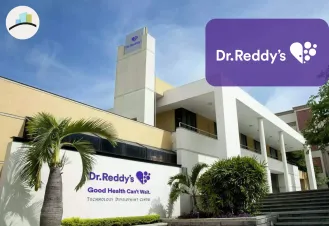
Dr. Reddy's Laboratories experienced a notable boost in its stock price, gaining nearly 3% on June 27, following the announcement of its plan to acquire Haleon Plc's nicotine replacement therapy (NRT) business.
This acquisition has stirred a mix of reactions among brokerage firms, reflecting both optimism and scepticism.
By 9:56 AM, Dr. Reddy's shares were trading at Rs 6,203.45 apiece on the National Stock Exchange (NSE).
The acquisition deal involves Dr. Reddy's purchasing Haleon's global portfolio of consumer healthcare brands in the NRT category, excluding the US market.
This includes acquiring shares of Northstar Switzerland SARL, a company within the Haleon group, for a total consideration of GBP 500 million.
The payment structure comprises an upfront cash payment of GBP 458 million, with the remaining GBP 42 million being performance-based contingent payments due in 2025 and 2026.
The portfolio being acquired is extensive, featuring Nicotinell, a leading brand in the NRT category with a presence in over 30 countries across Europe, Asia (including Japan), and Latin America.
Nicotinell holds the position of the second-largest NRT brand globally (excluding the US), dominating 14 of the top 17 global markets. Its lozenge and mini-lozenge formats are particularly successful worldwide.
Additionally, the acquisition includes local market leaders such as Nicabate in Australia, Thrive in Canada, and Habitrol in New Zealand and Canada.
The deal covers all NRT product formats, including lozenges, patches, gums, and various pipeline products, in all applicable markets outside the US.
ICICI Securities noted that the portfolio generated approximately GBP 217 million in revenue in CY23, valuing it at 2.3 times its revenue.
The brokerage firm considers this valuation fair, given the portfolio's global reach, therapeutic acceptance from the World Health Organization (WHO), and an estimated EBITDA margin potential of around 25%.
ICICI Securities emphasized that Dr. Reddy's active participation in mergers and acquisitions (M&A) is strategic as it plans for a future beyond its blockbuster cancer drug, Revlimid.
The acquisition aligns with Dr. Reddy's focus on consumer healthcare.
With a robust balance sheet and consistent free cash flow generation, funding this acquisition should not pose a problem for the company.
However, some brokerages remain cautious. Jefferies and Nomura have expressed reservations about the deal. Nomura, in particular, questioned Dr. Reddy's strategic rationale behind the acquisition.
While acknowledging that the acquisition could be EPS (Earnings-per-Share) accretive, Nomura predicted that the ROIC (Return on Invested Capital) would likely remain in the high-single digits, which might not be compelling enough for investors.
Jefferies highlighted that the OTC brands in the acquired portfolio would require significant upfront investments.
They also pointed out that the impact of potential synergies from this acquisition is likely to become evident only in the fiscal years 2027-28.
This indicates a long-term view on realizing the full benefits of the acquisition, which could make some investors wary.



