
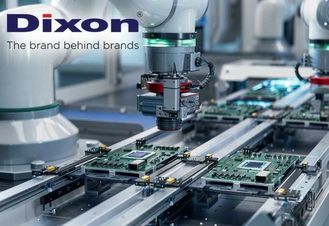
Dixon Technologies India Limited, a prominent player in India's electronics manufacturing landscape, recently made waves in the market by hitting a 52-week high in its stock price. The surge in stock value, which saw shares of Dixon Technologies reach Rs 5,378 in early trade on September 28, was attributed to a significant development involving one of its subsidiaries and Xiaomi, a globally recognized smartphone brand.
In a press release issued on September 27, Dixon Technologies announced that its wholly-owned subsidiary, Padget Electronics Private Limited, had inked a noteworthy agreement with Xiaomi Technology India Private Limited. The essence of this agreement revolves around the manufacturing of smartphones for Xiaomi by Padget Electronics. The location selected for this manufacturing venture is Padget's state-of-the-art manufacturing unit situated in Noida, Uttar Pradesh.
The significance of this partnership extends beyond the confines of business collaboration. It mirrors the evolving dynamics in India's electronics and smartphone market, which is the second-largest in the world. In such a fiercely competitive landscape, even global giants like Xiaomi face challenges. Heightened regulatory scrutiny and the need to adapt to changing market dynamics have compelled Xiaomi to seek partnerships and localization opportunities in India.
India's policy direction has been clear: encourage the localization of various aspects of electronics manufacturing, from assembly to distribution. This aligns with the government's 'Make in India' initiative, which aims to boost domestic manufacturing and create job opportunities. For companies like Xiaomi, partnering with established players like Dixon Technologies is a strategic move to comply with these regulations while also benefiting from local expertise and resources.
Dixon Technologies (India) stands as a testament to the potential within India's electronics manufacturing sector. The company has carved a niche for itself as one of the largest design-focused and solutions-oriented companies specializing in manufacturing consumer durables, lighting solutions, and mobile phones in India. Its extensive experience and expertise in the field make it an ideal partner for global giants like Xiaomi seeking to establish a strong local presence.
The competitive nature of the Indian smartphone market cannot be overstated. With a vast and tech-savvy population, India has become a battleground for global phone brands. Companies like Apple, Samsung, and Xiaomi are actively vying to increase their market share and enhance their sales in this highly populous nation. In this context, strategic partnerships and localized production are pivotal for success.
Xiaomi's journey in the Indian market reflects the challenges faced by global players. Once a prominent player, Xiaomi encountered regulatory hurdles and navigated the complexities of overexpanding its product portfolio. This underscores the importance of adapting to the local market dynamics and regulatory environment.
In conclusion, Dixon Technologies' stock hitting a 52-week high on the back of its subsidiary's manufacturing deal with Xiaomi underscores the significance of strategic collaborations in India's fiercely competitive electronics and smartphone market. This partnership reflects a broader trend of localization and compliance with regulatory imperatives, all of which contribute to the growth and dynamism of India's electronics manufacturing landscape. As India continues to be a vital hub for global electronics production, such partnerships are expected to play a pivotal role in shaping the industry's future.



