
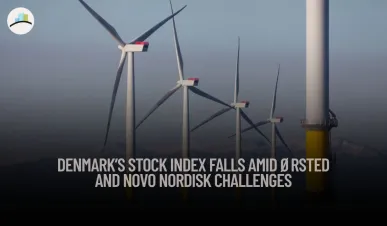
In 2025, Denmark’s OMXC25 index, which tracks the country’s 25 largest listed companies, has registered a significant decline, becoming the worst-performing developed-market benchmark globally. The index has dropped approximately 7% year-to-date and 14% over the past 12 months. In stark contrast, many European indices, such as the Stoxx Europe 600, have shown positive gains in the same period. This underperformance is largely driven by difficulties faced by two dominant Danish corporations: Ørsted, a leader in offshore wind energy, and Novo Nordisk, a global pharmaceutical giant specializing in diabetes care.
More Articles:
Ørsted’s Financial Struggles Impact Market Confidence
Ørsted’s steep decline has been the most dramatic contributor to the OMXC25’s poor performance. Once hailed as a poster child of the green energy revolution, Ørsted now faces mounting financial pressures. The company announced a substantial rights issue worth 60 billion Danish kroner (around $9.4 billion) aimed at addressing rising debt and funding its Sunrise Wind project off the U.S. coast.
Several factors have exacerbated Ørsted’s woes. Inflation and supply-chain disruptions have pushed project costs higher. Additionally, regulatory uncertainties, including a temporary halt on related offshore projects due to political shifts and regulatory reviews in the U.S., have delayed progress and increased financial strain. Ørsted’s plan to “farm down” — selling stakes in early project phases to third parties — has stalled amid tighter credit conditions, forcing the company to bear more of the financial burden internally.
The resulting 29% drop in Ørsted’s share price has not only hurt shareholders but also shaken confidence in the broader Danish market, given Ørsted’s outsized weighting in the OMXC25.
Novo Nordisk’s Regulatory and Market Challenges
Novo Nordisk, another heavyweight in the OMXC25, has encountered its own set of challenges. The company, which dominates the global diabetes and obesity treatment markets, is facing heightened regulatory scrutiny regarding drug pricing and reimbursement policies, especially in the United States and Europe. Policymakers are increasingly focused on controlling healthcare costs, which puts pressure on pharmaceutical companies’ pricing power.
This evolving regulatory landscape has introduced uncertainty about Novo Nordisk’s future earnings growth, dampening investor enthusiasm. Coupled with concerns over competition and innovation cycles, Novo Nordisk’s shares have contributed to the broader downward trend of the Danish benchmark.
Broader Implications for Denmark’s Economy
The struggles of Ørsted and Novo Nordisk highlight the risks of concentrated sector exposure in Denmark’s equity market. The OMXC25 index is heavily weighted towards renewable energy and pharmaceuticals, which together constitute a substantial portion of the nation’s economic growth engine.
With both sectors facing headwinds, investor sentiment towards Danish equities has soured. This situation underscores the need for diversification within the Danish economy and capital markets, especially in light of the shifting global energy landscape and changing healthcare regulations.
Orsted is the latest blow to a market that has already had more than its share of troubles in the past year https://t.co/xVmUx5RI4G
— Bloomberg (@business) August 11, 2025
Outlook and Strategic Considerations
Looking forward, Denmark’s economic and market recovery will hinge on several factors:
-
Regulatory clarity: Both Ørsted and Novo Nordisk require a stable and predictable regulatory environment to restore investor confidence. Clear policies on energy infrastructure and pharmaceutical pricing will be crucial.
-
Market diversification: Encouraging growth in emerging sectors and expanding the investor base beyond concentrated industries can mitigate future risks.
-
Global market trends: As global energy policies evolve and healthcare reforms continue, Danish companies must adapt strategically to maintain competitiveness.
While challenges remain significant, Denmark’s strong industrial base and innovative capacity provide a foundation for long-term recovery and growth, provided structural and regulatory issues are addressed effectively.
Disclaimer:
This article is for informational purposes only and does not constitute investment advice or a recommendation to buy or sell any securities. Procapitas does not provide personalized financial advice. All investment decisions should be made in consultation with a licensed financial advisor. The information presented is based on publicly available sources and Procapitas’ independent research and analysis, which are believed to be reliable but are not guaranteed for accuracy or completeness.



