
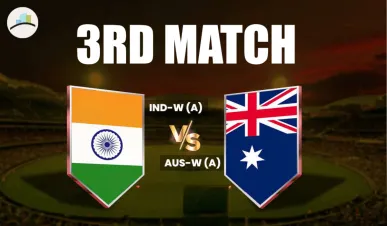
India Women vs Australia Women: A Rivalry That’s Set to Redefine Cricket – And Beyond
Brace yourselves, because the India Women vs Australia Women rivalry is not just another cricket match. What’s unfolding on the field is a battle that could redefine the entire future of women’s sports—and here’s why you need to pay attention.
On the surface, this looks like a classic contest of cricketing prowess, but dig deeper and it’s clear: This isn’t just a game. It’s a clash of cultures, a monumental shift in global sports dynamics, and a showdown that could spark a revolution for women’s cricket.
In every boundary hit, in every wicket taken, the stakes are higher than ever before. So why does this rivalry matter? What could it mean for the future of cricket, women’s sports, and the very fabric of competitive play?
MORE ARTICLES:
The Backdrop: Australia’s Supremacy and India’s Uprising
Let’s be clear: Australia has dominated women’s cricket for decades. Their infrastructure, resources, and continuous performance have made them the gold standard in women’s cricket. But here’s the thing: India is no longer just catching up. They’re gaining ground fast, and the rise of India’s women cricketers has put Australia on notice.
Players like Smriti Mandhana, Harmanpreet Kaur, and Deepti Sharma are pushing boundaries, proving that India’s women aren’t just playing for a spot—they’re playing for global supremacy. The India Women’s cricket team is no longer the underdog, they’re a powerhouse ready to challenge Australia’s longstanding dominance.
And this is where the intrigue begins: India’s explosive rise is shaking the very foundation of women’s cricket, creating an intense competition that has the world watching.
Why This Rivalry Is More Than Just Cricket
Here’s the kicker: This rivalry goes far beyond the sport itself. It’s a symbol of empowerment, change, and the relentless fight for gender equality in sports. For decades, women’s cricket was relegated to the sidelines, dismissed as a lesser pursuit. But now, as India challenges Australia’s supremacy, it’s a clear statement: Women’s cricket is here to stay.
Let’s face it, the spectacle of India vs Australia women’s cricket is forcing the sports world to sit up and take notice. Why? Because in a game historically dominated by men, these women are redefining the narrative.
This rivalry is powerful because it’s about more than just numbers on the scoreboard. It’s about changing the game for every young girl who dreams of playing cricket professionally. For the first time, they see a real pathway to success—not just in India, but across the globe.
The Explosive Potential: What Happens When India Wins?
What if India wins? Let’s talk about the seismic implications of such a victory. The commercial floodgates will open. India’s win would mark the ascension of women’s cricket into mainstream sports culture. Forget small stadiums, forget modest viewership—this would thrust women’s cricket into the limelight, attracting sponsorships, media deals, and investments at a scale never seen before.
The Women’s Premier League (WPL), already gaining momentum, would skyrocket in popularity. Corporate sponsors, already looking for opportunities to tap into the rapidly growing market of women’s sports, would flock to women’s cricket with unprecedented interest.
On a political level, this shift is also crucial. As India gains dominance in women’s cricket, it sends a clear message to other nations: Gender barriers are crumbling, and India is leading the charge.
But let’s not sugarcoat it: If India loses, the stakes are just as high. Australia, already a powerhouse, would solidify its position and deepen its financial and cultural dominance in women’s cricket. A defeat for India could create a new era of frustration, where women’s cricket in India struggles for resources and visibility.
Why Now? The Perfect Storm for Women’s Cricket
There’s something special about this moment. The timing of this rivalry couldn’t be more significant. Women’s cricket is on the rise worldwide, and India and Australia are at the forefront of this revolution. With global attention focused on the T20 World Cup, the WPL, and other major events, the world is eager for change, and this series could be the catalyst.
Think about it: What happens when the largest cricketing nation (India) goes head-to-head with the most successful women’s team (Australia)? What unfolds is the ultimate test of will, skill, and resilience—with untold economic, political, and cultural consequences.
The Risks: Can India Handle the Pressure?
While the excitement is palpable, there are hidden risks that often go undiscussed. India’s rise has brought with it incredible pressure—both on the players and the system. With the spotlight so intensely focused on them, the potential for burnout, injuries, and mental health struggles increases.
Women cricketers in India are playing under extreme expectations, and as the country’s hopes rise, so too does the pressure to deliver. Can they sustain this level of performance? What happens if the pressure becomes too much? These questions, while rarely asked, hold the key to the sustainability of India’s cricketing future.
On a larger scale, what happens when women’s cricket reaches global heights? Will infrastructure keep pace with the growing demand? The economic ecosystem surrounding women’s cricket needs to catch up quickly to avoid the same pitfalls that have plagued other women’s sports.
The Bigger Picture: Changing Women’s Sports Forever
No matter how this series plays out, one thing is clear: This rivalry is the beginning of a movement that will change the face of women’s sports forever. It’s a clash of nations, cultures, and ideologies that is rewriting the rules of what’s possible. This isn’t just about cricket. This is about breaking barriers, about proving that women’s sports deserve to be front and center on the global stage.
The question isn’t whether India can take down Australia—it’s whether the world will recognize that this rivalry could mark the dawn of an era where women’s cricket is as important, powerful, and commercially viable as its male counterpart.



