
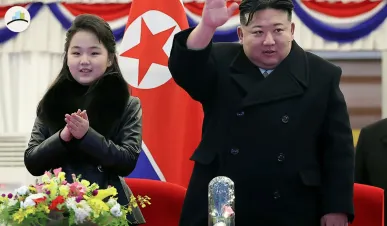
Kim Ju Ae, the teenage daughter of North Korea’s enigmatic leader Kim Jong Un, has become one of the world’s most closely watched figures with analysts increasingly viewing her as the likely future ruler of the isolated nuclear state.
Her appearance with her father and mother at the sacred Kumsusan Palace of the Sun the resting place of North Korea’s founding leaders — has ignited fresh speculation that she is being groomed to inherit the supreme leadership of the country.
Experts believe that her frequent high‑profile public roles and symbolic gestures are part of a calculated plan to normalize the idea of her future leadership, possibly ahead of a major party congress in 2026.
Kim Ju Ae: North Korea’s Most Talked‑About Teen
Kim Ju Ae, the daughter of North Korean leader Kim Jong Un, has become one of the most closely watched figures in global politics. Analysts and intelligence agencies increasingly see her as the likely future leader of North Korea’s hereditary dictatorship, a rare situation in modern world politics where dynastic rule continues.
A Sudden Rise to the Spotlight
Ju Ae’s life was almost entirely private until November 2022, when she publicly appeared for the first time alongside her father at a ballistic missile launch — a highly unusual moment given North Korea’s secretive leadership culture. Since then, she has appeared with Kim Jong Un at military parades, missile tests, factory tours and even international visits, including a trip to Beijing, sparking speculation that she is being prepared for future leadership.
Her name and image began surfacing in state media, where she was first called the “beloved child” and later described with more prestigious titles typically reserved for honored leaders, a shift observers see as intentional political messaging.
Symbolism and Succession Signals
On New Year’s Day 2026, Ju Ae made her first public visit to the Kumsusan Palace of the Sun, North Korea’s sprawling mausoleum for founding leaders Kim Il Sung and Kim Jong Il. Walking beside her father and in the position normally held by senior officials, her visit was widely interpreted as a powerful symbolic message that she is being positioned as Kim Jong Un’s successor.
Analysts argue this was not coincidental. State media seem to be using family appearances to project continuity and dynasty, laying the groundwork for Ju Ae’s future leadership role. South Korea’s National Intelligence Service (NIS) has stated that she is likely being groomed as the next leader, even though she’s still a teenager and cannot yet hold formal office.
Who Is Kim Ju Ae? The Girl Behind the Rumors
Very little definitive information about Ju Ae’s early life is available, due to North Korea’s secrecy. She was reportedly born in 2013, making her around 13 years old in 2026. Her mother is Ri Sol‑ju, North Korea’s First Lady, and she has at least two siblings who have not been publicly identified.
Unlike her father or grandfather — who were both adults before debuting publicly — Ju Ae was introduced as a young child, suggesting a deliberate effort to build familiarity and loyalty among the North Korean public. Her appearances have included both ceremonial events and key national celebrations, further elevating her status in the public consciousness.
MORE ARTICLES:
The Kim Dynasty: A Rare Modern Hereditary State
North Korea remains one of the world’s few inherited leadership systems outside traditional monarchies. Since the state’s founding in 1948, power has passed within the Kim family, from Kim Il Sung to Kim Jong Il and now to Kim Jong Un — and potentially soon to Ju Ae. This dynastic continuity is reinforced through state propaganda, celebrations of the “Paektu bloodline,” and carefully staged public appearances by family members.
What Happens Next? Congress, Titles and Power
Speculation now centers on the Ninth Congress of the Workers’ Party of Korea, expected in early 2026. Experts believe this may be the moment when Ju Ae’s status is formalized, possibly in a party leadership role that would solidify her path toward eventual supreme leadership.
However, some analysts remain cautious. Ju Ae is still young, and North Korea’s leadership structure is deeply male‑dominated and opaque. Others argue her visibility may be more about reinforcing the image of a stable family leadership rather than a concrete succession plan — at least for now.



