
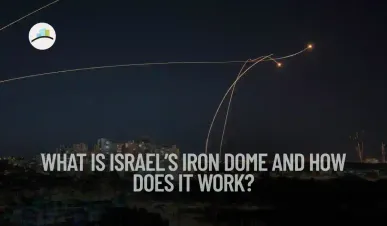
Israel’s Iron Dome missile defense system, or "Kippat Barzel" in Hebrew, has been a critical shield for the country since its full deployment in 2011. Built to intercept short-range rockets and artillery shells in mid-air, the system plays a central role in protecting Israeli civilians and infrastructure from aerial attacks.
How the Iron Dome functions
The Iron Dome is a mobile, all-weather air defense system that tracks and neutralizes incoming threats. It includes radar units, a battle management control system, and missile launchers armed with Tamir interceptors.
More Articles:
When a rocket is detected, the system calculates its trajectory. If the missile is likely to hit a populated area or key infrastructure, a Tamir interceptor is launched to destroy it mid-air. If the projectile is expected to fall in an uninhabited zone, it is typically ignored to conserve resources.
Strategic deployment and capabilities
Each Iron Dome battery can defend an area of about 60 square miles. The system has a range of 2.5 to 43 miles and includes:
-
3 to 4 launchers per battery
-
20 Tamir missiles per launcher
-
An estimated cost of over $100 million per battery
According to Israeli authorities, there are at least 10 active batteries positioned across the country to cover major cities and conflict-prone regions.
🧵How the Iron Dome Works: A 101 Thread
— Faithproof Apologetics (@Faithproofapolo) June 13, 2025
Israel’s Iron Dome is one of the most effective air defense systems in the world — designed to intercept and destroy short-range rockets, artillery, and drones before they hit populated areas.
👇 Here’s how it works: pic.twitter.com/f1MCaUUjya
US involvement and financial support
The Iron Dome was developed by Rafael Advanced Defense Systems with backing from the United States. Since its inception, the US Congress has approved billions of dollars in aid to fund development, missile production, co-manufacturing, and upgrades. This reflects a deep strategic partnership between the two nations.
Limitations of the system
Despite its effectiveness, the Iron Dome has known vulnerabilities. Analysts warn that the system could be challenged by saturation attacks—when a large number of rockets are launched simultaneously from multiple directions, potentially overwhelming the interceptors.
Recent developments
As of June 13, 2025, the Iron Dome was activated in response to missile attacks over Tel Aviv. Images from the city show the system intercepting missiles in real-time, highlighting its continued operational significance in a volatile regional climate.



