
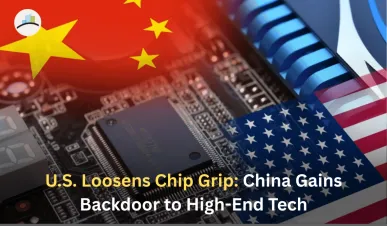
In a strategic pivot that could reshape global semiconductor flow, the U.S. government has quietly waived export restrictions on high-end chip-design software—used by giants like Siemens, Cadence, and Synopsys—for Chinese entities. This unexpected reversal, tied to recent rare-earth trade discussions, is stirring fresh debate over economic diplomacy and national security.
1. Strategic Trade Signal, Not Just Business Relief
This move reflects a nuanced U.S. approach in managing technology diplomacy. While clearly easing tensions, the action wasn’t just about boosting corporate sales—it’s part of a broader trade-off: access to critical chip-design tools in exchange for improved rare-earth exports from China. It’s a calculated blend of economic and geopolitical leverage.
2. What Markets Aren’t Talking About Enough
A. Essential Leverage Restored
Chip-design software may not generate billions in revenue, but it's the lifeblood of semiconductor innovation. Without it, production stalls. By restoring access, China regains its ability to build advanced semiconductors, potentially accelerating breakthroughs in AI and telecom sectors. There’s now confidence that chip innovation won’t be bottlenecked.
B. Competitive Tensions Within China
U.S. EDA powerhouses will reclaim momentum, but they’ll face fresh opposition. China’s Big Fund III has poured billions into competing domestic EDA platforms. As U.S. firms return, this could force them to innovate faster—or face a setup that accelerates their own displacement in the long term.
3. Business & Policy Ripples
| Who It Impacts | Short-Term Effect | Longer-Term Stakes |
|---|---|---|
| EDA Companies | Bounce back in Chinese licensing | Must combat long-term localization efforts |
| Chinese Chipmakers | Faster design cycles, higher productivity | May face IP leakage scrutiny |
| U.S. Officials | Demonstrates negotiation flexibility | Has to enforce rare-earth compliance or risk pushback |
More Articles:
4. Historical Context: Old Tactics, New Terrain
This move mirrors Cold War-era tech diplomacy, where export controls were temporarily relaxed for geostrategic gains. The lesson? These pockets of openness can vanish as swiftly as they arrived, especially if geopolitical tensions reemerge or China fails to honor reciprocal agreements.
5. Hidden Risks & Opportunity Zones
-
Risk: Revived software access may inadvertently expose design IP to state-led espionage max.
-
Opportunity: Re-entering the Chinese market lets U.S. EDA players regain footing in AI and autonomous sectors.
-
Risk: China’s energized EDA development, backed by massive funds, may still chip away at U.S. market share.
-
Opportunity: Enforcement of rare-earth concessions could strengthen the reliability of U.S.-China trade pacts.
6. Watch This Space
-
Revenue rebound: Look at Q3 licensing reports for Cadence and Synopsys in the China region.
-
Rare-earth delivery: See if China follows through on supply agreements—initial volumes will set the tone.
-
IP safeguards: Expect next moves on licensing terms and export compliance, possibly with tightened oversight.
-
Emerging competitors: Track domestic Chinese EDA startups and overseas licensing shifts.
🔑 Why This Matters
-
Global Tech Innovation: Unlocking these tools lifts a key barrier to chip progress worldwide.
-
Investor Signal: EDA firms stand to regain revenue—but only if geopolitical friction doesn’t reverse course.
-
National Security: Balancing commerce with IP protection makes this a test case in modern tech diplomacy.



