
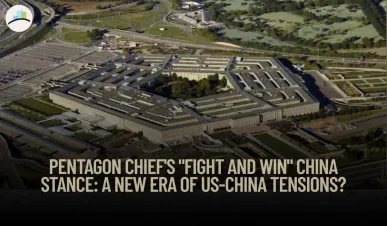
Pentagon Chief's Strong Words on China: What It Means
Okay, so you probably heard about this, but the Pentagon chief, Lloyd Austin, really laid down the gauntlet on China the other day. He basically said the U.S. is ready to "fight and win" against China. Wow. That's pretty strong language, right? I mean, I've been covering defense for a while now, and even I felt a little jolt hearing that. It wasn't some subtle diplomatic comment; this was a clear and direct message. Honestly, it got me thinking – what does this really mean for US-China relations, and what are the potential implications for the rest of the world? It's a pretty big deal, and frankly, a little unsettling.
Decoding the "Fight and Win" Message
Now, we have to be careful here. The Pentagon is quick to say this isn’t some declaration of imminent war. They emphasize readiness, preparedness. But let’s face it, “fight and win” isn’t exactly diplomatic jargon. It's about projecting strength, deterring aggression, and making sure China understands that the US isn't backing down from any potential conflict. There’s a lot of posturing involved, of course, and I think that’s a key point to understand. But the language choice itself is significant. It reflects a hardening stance, a growing sense of competition, and perhaps, even a degree of anxiety over China's rising military power. It's not just about Taiwan anymore; it's about the broader strategic competition in the Indo-Pacific and beyond.
Austin also talked about strengthening alliances and partnerships in the region, which is a smart move. The US can't face this alone. It needs its allies in Asia and beyond to counter China's influence and any potential aggression. So, while the "fight and win" statement is alarming, it's important to look at the bigger picture of the US trying to shore up its position through diplomatic and military strategy.
The Context Matters: Rising Tensions in the South China Sea
This statement comes at a time of heightened tensions, you know? We've seen increasing Chinese assertiveness in the South China Sea, disagreements over Taiwan, and a general uptick in military activity. The recent balloon incident, for instance, did nothing to ease concerns. All of this fuels the rhetoric and makes strong statements like Austin’s feel less surprising, even if they are still pretty alarming. It’s not just some random comment; it’s part of a larger narrative of increasing US-China friction, and we need to understand that context.
Several experts I've spoken to point to China's military modernization as a key factor. China's military capabilities are growing, and the US is responding accordingly. It’s a complex interplay of power dynamics, and this “fight and win” comment is a clear marker in that ongoing competition. It signals a shift – perhaps a subtle one – in how the US views its relationship with China.
Looking Ahead: What's Next?
Honestly, it's hard to say exactly what the future holds. But it's clear that we're in a period of significant uncertainty. The "fight and win" rhetoric raises several questions: Will this lead to increased military spending? Will there be more aggressive military maneuvers in the region? Will it spark a new arms race? These are all very real concerns that we'll need to be watching closely. It's a moment that calls for careful diplomacy and a measured response from all sides. No one wants to see a conflict, but we're certainly in a period where the risk feels more palpable than it has in recent decades.
The coming months will be crucial in determining how this plays out. We’ll be closely watching for diplomatic initiatives, military deployments, and of course, any statements from the Chinese government. This isn’t just a US-China issue; it has global implications, affecting trade, security, and the overall geopolitical landscape. And it will be very interesting (and perhaps a little terrifying) to see how everything unfolds.



