
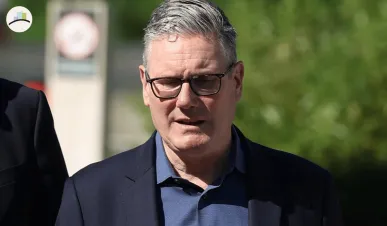
Keir Starmer has announced he will resign as UK prime minister and Labour leader, ending a turbulent spell in Downing Street less than two years after leading Labour to a landslide general election victory. The move has thrown British politics into another leadership crisis, with Andy Burnham now widely seen as the frontrunner to replace him after his return to Parliament intensified pressure on Starmer’s leadership. Reuters and AP reported that Starmer will stay on as caretaker prime minister until Labour chooses a new leader, with a successor expected before Parliament returns in September.
Why Did Keir Starmer Resign?
Keir Starmer’s resignation came after months of falling popularity, pressure from Labour MPs and growing concern that the government was losing control of the political narrative.
Starmer entered Downing Street in July 2024 after a huge Labour victory, but his government struggled to deliver the economic growth and public service improvements many voters expected. Public frustration grew over the cost of living, weak services and repeated political missteps.
NDTV reported that Starmer spent the weekend considering his future after Andy Burnham won a special election for a seat in Parliament, a victory that made Burnham’s leadership challenge much harder to ignore.
The pressure became too strong for Starmer to survive. Instead of fighting a damaging internal party battle, he chose to step down and allow Labour to begin the process of choosing a new leader.
Is Keir Starmer Still UK Prime Minister?
Yes, for now.
Starmer has announced his resignation, but he will remain as caretaker prime minister until Labour chooses a new leader. This means he is still in office temporarily, but his time as UK prime minister is coming to an end.
AP reported that Starmer will step down from office in the coming weeks once a successor is selected. Reuters also reported that a new leader is expected to take over by September, when Parliament returns.
This is normal in the UK system. A prime minister can announce resignation but stay in place until the governing party completes its leadership process.
Breaking: U.K. Prime Minister Keir Starmer said he would step down following a rebellion in his party, clearing the way for the country’s sixth leader in seven years https://t.co/LhUFjQ9c0v
— The Wall Street Journal (@WSJ) June 22, 2026
Who Could Replace Keir Starmer?
Andy Burnham is now the name at the center of the race.
Burnham, the former mayor of Greater Manchester, recently returned to Parliament and has quickly become the most talked-about possible successor. Reuters described him as the frontrunner to replace Starmer, while AP reported that his parliamentary win became a turning point in the pressure campaign against the prime minister.
Burnham has long been seen as a strong communicator with appeal beyond Westminster. His supporters believe he could reconnect Labour with voters who feel disappointed by Starmer’s government.
But becoming prime minister will not be simple. Burnham would inherit a weak economy, divided party and rising pressure from both Reform UK and the Greens.
Why Is Andy Burnham So Important Right Now?
Andy Burnham matters because he represents a different kind of Labour politics.
Starmer’s leadership was built around discipline, caution and a promise of stability after years of Conservative chaos. Burnham is often seen as more emotional, direct and rooted in regional politics, especially because of his long association with Greater Manchester.
His return to Parliament gave Labour MPs a realistic alternative to Starmer. That changed the balance of power inside the party.
Before Burnham’s parliamentary win, frustration with Starmer existed but lacked a clear replacement. After Burnham’s win, Labour MPs had someone they could rally around.
What Happens After A UK Prime Minister Resigns?
When a UK prime minister resigns, the country does not automatically hold a general election.
The governing party usually chooses a new leader. Once that person can command support in the House of Commons, the monarch appoints them as prime minister.
That means Labour can replace Starmer without calling a national election, because Labour still holds power in Parliament.
However, opposition parties may demand a general election, especially if they argue that the new prime minister does not have a personal mandate from voters.
MORE ARTICLES:
Why Is Labour Under Pressure?
Labour is under pressure from several directions at once.
Reform UK, led by Nigel Farage, has been gaining support among voters angry about immigration, public services and the economy. At the same time, the Green Party has been attracting liberal and left-leaning voters unhappy with Labour’s direction.
NDTV reported that Labour has been losing liberal voters to the Greens while facing a rising Reform UK, which has consistently led in nationwide opinion polls.
This left Starmer squeezed from both sides. For many Labour MPs, the fear was simple: if the party did not change direction quickly, it could lose the next election badly.
How Have Markets Reacted To Starmer’s Resignation?
Financial markets reacted cautiously as speculation over Starmer’s exit grew.
Reuters reported that the British pound fell as investors watched the leadership uncertainty, while concerns grew over what Andy Burnham’s economic approach could mean for borrowing, taxes and spending.
The Wall Street Journal also reported that sterling fell and gilt yields rose as expectations of Starmer’s resignation increased, with investors concerned about possible changes in fiscal policy under a Burnham-led government.
This matters because the next prime minister will not only face political pressure. They will also need to convince markets that the UK’s public finances are under control.
Why Is This Such A Big Moment For UK Politics?
Starmer’s resignation adds to a decade of political instability in Britain.
Since the Brexit referendum, the UK has seen repeated leadership changes, shifting party identities and deep voter frustration. Starmer had promised to bring stability, but his resignation shows how difficult that has become.
Reuters described Starmer as another prime minister leaving early in a decade marked by repeated political turnover.
For voters, the bigger issue is not only who leads Labour next. It is whether any new prime minister can fix the same problems that damaged Starmer: slow growth, pressure on public services, immigration concerns, public debt and falling trust in politics.
What Does This Mean For The UK?
The UK is now heading into a fresh leadership contest at a sensitive time.
The next prime minister will need to restore Labour’s confidence, respond to Reform UK’s rise, stop voters drifting to the Greens and calm financial markets. That is a difficult task before even dealing with policy.
If Andy Burnham becomes prime minister, he may try to reset Labour’s image with a more direct, populist and regional message. But he will also face immediate questions about spending, borrowing and whether he can unite Labour’s different wings.
Starmer’s exit may solve Labour’s leadership problem for a moment. It does not solve the deeper political problem facing the party.
Final Takeaway
Keir Starmer’s resignation marks a major turning point in UK politics. Less than two years after winning a huge election victory, he has been forced to step aside under pressure from within his own party.
Andy Burnham is now the leading figure to watch. His return to Parliament changed the Labour leadership conversation and gave Starmer’s critics a credible alternative.
For now, Starmer remains caretaker prime minister. But Britain is preparing for another change at the top, and Labour’s next leader will inherit a country that is restless, divided and demanding faster results.



