
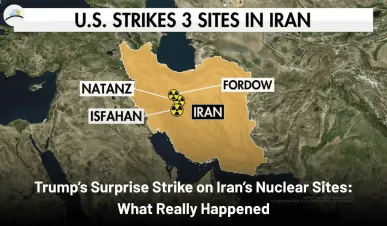
So here’s the big news that’s got everyone talking. On June 22nd, President Trump gave the green light for a surprise airstrike on three major nuclear sites in Iran — Fordow, Natanz, and Isfahan. It was a quiet, secret move that hit hard and fast. The idea? Shut down Iran’s nuclear enrichment program before it becomes a bigger problem. The U.S. military called it "Operation Midnight Hammer," and from what they’re saying, it was a success. But honestly, a lot of people are still trying to wrap their heads around what this means for all of us.
❓WHAT REALLY HAPPENED❓
— Reality G (@soundreece) June 22, 2025
🤥Trump: “The strikes were a spectacular military success. Irans key nuclear enrichment facilities have been completely and totally obliterated!”
Ritter: “He bounced six bombs off an indestructible facility, claiming destruction despite the opposite… pic.twitter.com/0MGGzx4PHt
Why Did This Happen?
There had been talk for weeks that something big might go down, but nobody really expected it this soon or in this way. Trump was doing the usual—talking tough but also acting like he wanted peace. Meanwhile, backdoor talks with Iran weren’t going anywhere. European diplomats tried stepping in, but it didn’t help. And with Israel already striking some of Iran’s allies and missile facilities, things were getting tense. Some say Trump felt this was the moment to act, before Iran got too close to having serious nuclear capabilities.
What Went Down During the Strike
This wasn’t just a couple of planes dropping bombs. It was a pretty advanced, well-planned operation. The military used stealth B-2 bombers, Tomahawk missiles from submarines, and huge bunker-busting bombs. Over 125 aircraft were involved. What’s wild is they even used a decoy — fake bombers were flown near Guam while the real ones slipped through from the east. The U.S. says they hit their targets cleanly and caused major damage to Iran’s nuclear centers. But not everyone agrees on how effective it really was.
What Trump Said (And What He Didn’t Say)
Trump’s post about the whole thing didn’t exactly calm people down. On Truth Social, he hinted at regime change, saying if the current Iranian government couldn’t “Make Iran Great Again,” then maybe it’s time for a new one. But other officials tried to cool things off, saying this wasn’t about overthrowing Iran’s leadership—just about stopping their nuclear work. That mixed messaging left a lot of folks wondering what the U.S. really wants here.
People Are Asking — Was This Even Legal?
There’s a big debate going on in Washington. Some in Congress are furious that Trump went ahead without asking them first. They say it violates the War Powers Act. Others—mostly Republicans—are defending him, saying the president had the right to act fast if he believed it was a threat. Legally, it’s a gray area. And politically, it’s definitely heating things up. Some lawmakers are already pushing for new rules to stop presidents from doing this kind of thing without a vote.
What Happens Now?
Iran isn’t staying quiet. They’ve already fired missiles at Israel and warned that more is coming. Their parliament even voted to shut down the Strait of Hormuz, which could seriously mess with global oil prices since a big chunk of the world’s oil goes through there. Cyber attacks are also picking up. Experts are saying we might see proxy wars start back up in places like Syria or Lebanon. So yeah, this might just be the beginning.
Read More:
Some Things to Think About
-
Experts say while the facilities were damaged, Iran’s scientists and their nuclear knowledge still exist. So this may slow them down, but it’s not over.
-
Some believe this might push Iran to build nukes even faster, feeling like they have no choice now.
-
Others say the U.S. showed strength and that Iran might actually come back to the table for talks.
-
Oil prices spiked after the strike, and defense stocks jumped too. That tells you how nervous markets are.
Final Thoughts
Whether you support the strike or not, there’s no denying this was a big move. And it’s probably going to have long-lasting effects. The scary part is, nobody really knows what Iran will do next—or how far this might go. Some say this could be the moment that defines U.S. foreign policy for years. Others worry we just lit a match in a room full of gasoline. Either way, we’re watching history unfold.



