
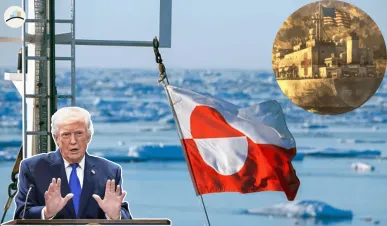
When U.S. President Donald Trump announced that he would be sending a U.S. military hospital ship to Greenland to help with what he described as a “lack of care for the sick,” it quickly became a diplomatic issue. What seemed like a simple humanitarian gesture raised eyebrows both in Greenland and Denmark, sparking a debate over the need for foreign intervention in a region that already has a strong healthcare system.
Greenland said “no thanks” to President Trump’s plan to send a US hospital ship after he mocked its healthcare system https://t.co/59udFjg5Eg pic.twitter.com/WyAQS0dhs9
— Al Jazeera English (@AJEnglish) February 23, 2026
The Surprise Announcement
Trump made the announcement through his social media platform, stating that the U.S. was sending a “great hospital ship” to Greenland to take care of sick people who weren’t getting the help they needed. He posted a picture of a U.S. Navy hospital ship—typically used for disaster relief or humanitarian missions—and said it was already on its way.
But almost immediately, Greenland’s leaders shot down the idea. The country’s Prime Minister, Jens‑Frederik Nielsen, responded by saying that Greenland already has a well‑functioning public healthcare system that provides free medical care for all its citizens. He pointed out that there was no need for outside help.
Similarly, Denmark, the country responsible for Greenland’s foreign affairs and defense, echoed that sentiment, emphasizing that Greenland’s healthcare system was sufficient. This reaction left the U.S. to rethink the message it had unintentionally sent about the region’s needs and sovereignty.
MORE ARTICLES:
Why This Was Controversial
At first glance, sending a hospital ship might seem like a positive gesture — after all, humanitarian aid is generally welcomed. However, the timing and the way the offer was made raised concerns. The announcement wasn’t preceded by official talks or consultation with local officials in Greenland or Denmark. This led to an immediate backlash, especially in a region that prides itself on its autonomy and well‑established systems.
Greenland and Denmark already provide excellent healthcare, so the idea of sending a military vessel to offer medical assistance felt unnecessary and even somewhat insulting. It also raised questions about the true intentions behind the gesture. Was it really about providing help, or was it a strategic move to maintain influence in the Arctic region, where the U.S. has been increasing its presence?
Greenland’s Healthcare: A System That Works
Greenland’s healthcare system, which is funded by Denmark, ensures that all residents have access to free medical services. From local health clinics to hospitals in Nuuk and other cities, the country has a well‑developed infrastructure to meet its residents’ healthcare needs. For most Greenlanders, the notion of needing outside intervention to receive proper care is not only unnecessary — it’s a bit surprising.
Additionally, Greenland’s size and population are relatively small, which means the country doesn’t face the same level of overcrowding or healthcare shortages seen in larger nations. The idea that Greenland’s healthcare system is lacking in some way, especially when it already provides quality care, raised concerns about the U.S. government’s understanding of local needs.
The Bigger Picture: U.S. Arctic Interests
While the announcement about the hospital ship was framed as a humanitarian gesture, it also brought attention to wider geopolitical tensions in the Arctic region. Over the years, the U.S. has shown increased interest in Greenland due to its strategic location and the resources it holds, including minerals and oil reserves. Trump's previous comments about potentially purchasing Greenland only added to the suspicion that the U.S. was using a health-related offer as a pretext for greater influence.
Greenland’s refusal to accept the hospital ship was not just about healthcare — it was about maintaining its sovereignty and avoiding what might be seen as outside interference. The island has become a key player in global geopolitical dynamics, especially as climate change opens up new shipping routes and access to untapped resources.
A Misstep in Diplomacy?
The incident highlights how sensitive diplomatic relationships can be, particularly when a nation’s sovereignty is involved. The U.S. government has since clarified that the decision to send the ship was not part of a broader political strategy but simply a misunderstanding. However, for many in Greenland and Denmark, the offer came off as unilateral and disconnected from the reality of the region’s existing infrastructure and needs.
What started as an offer to help has now become a lesson in how to engage with international allies in a respectful and informed way. Misunderstandings like this remind governments that diplomacy isn’t just about policies — it’s about building trust, respecting local systems, and knowing when and how to offer help.
Looking Ahead: Strengthening Relationships
While the hospital ship issue seems to have cooled down for now, the larger conversation it sparked isn’t going away. The U.S. will need to find better ways to navigate the complex relationships it has with countries like Greenland, especially when offering aid or getting involved in regional matters. A more thoughtful, coordinated approach could help avoid future diplomatic hiccups and ensure that aid efforts are seen as genuine and well‑timed, rather than politically motivated.
For Greenland, the incident is a reminder of the importance of self‑reliance and sovereignty in a rapidly changing world, particularly as international interest in the Arctic continues to grow. The region’s leaders will likely continue to be cautious about outside interference, whether it comes in the form of humanitarian aid or strategic offers.



