
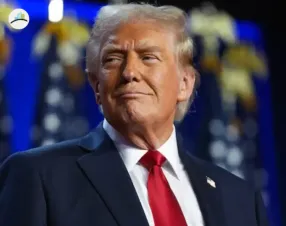
Former President Donald Trump has introduced a sweeping legislative proposal that merges major economic reforms with aggressive immigration policies. Known informally among Republicans as a “big, beautiful bill,” the plan lays out a vision that could define the GOP agenda heading into the next election cycle.
Tax Cuts Expanded, Deficit Concerns Loom
At the center of the proposal is the permanent extension of the 2017 tax cuts, which are scheduled to expire at the end of this year. The bill also increases the standard deduction—by $2,000 for joint filers and $1,000 for individuals—and exempts various forms of income from federal taxation, including overtime pay, tips, interest on car loans, and Social Security benefits.
These measures are aimed at boosting middle-class disposable income, a key pillar of Trump’s economic messaging. However, fiscal analysts project the plan could add up to $11 trillion to the national debt over the next decade, intensifying concerns among deficit-minded Republicans.
Child Tax Credit and SALT Cap Adjustments
The bill expands the child tax credit, although eligibility criteria remain vague. It also provides some relief from the state and local tax (SALT) deduction cap, a provision particularly important to Republicans from high-tax states like New York and California. However, the cap is not removed entirely, indicating a partial compromise rather than a full reversal.
Hardline Immigration Proposals Return
The legislation revives many of Trump’s first-term immigration policies. It allocates new funding for the completion of the southern border wall and boosts enforcement along coastal entry points. Changes to asylum processing aim to raise the threshold for credible fear claims and accelerate deportation timelines.
Though specific language has yet to be released, the immigration components are expected to include tighter restrictions on legal pathways and the reinstatement of expedited removal policies. These measures are likely to face strong legal challenges and renewed criticism from human rights advocates.
Welfare and Healthcare Programs Targeted for Cuts
The proposal introduces new work requirements for Medicaid recipients and shifts greater responsibility for food assistance (SNAP) programs to state governments. Critics argue these changes could result in fewer people receiving benefits and a rise in uninsured or undernourished Americans, particularly in economically disadvantaged regions.
Proponents claim the measures are intended to promote self-sufficiency and reduce long-term federal spending on entitlement programs.
Defense Revival, Student Loan Reversals, and Newborn Savings
The bill includes language to revive a missile defense initiative referred to as the “Golden Dome,” a nod to Reagan-era strategic defense concepts. It also calls for the full repeal of the Biden administration’s student loan forgiveness measures.
Another notable addition is the creation of government-backed savings accounts for newborns, although the financial structure and scale of contributions have not yet been outlined.
Climate Spending Cuts in Line With Past Stance
Continuing Trump’s past skepticism of federal climate policies, the proposal rolls back funding for clean energy programs and environmental research. These cuts reflect a broader push to limit federal intervention in the energy sector and redirect funds to military and domestic priorities.
Legislative Strategy: Unity or Gridlock?
Republican leaders hope to pass the bill using budget reconciliation, which allows for Senate approval with a simple majority and bypasses the filibuster. But even with this approach, the bill faces challenges.
Some fiscally conservative lawmakers remain hesitant, citing the potential debt increase and unclear economic outcomes. Meanwhile, Trump has begun leveraging his political clout, reportedly warning lawmakers that failure to support the bill could lead to primary challenges backed by his base.
Democrats Push Back on Economic and Moral Grounds
Democratic leaders have swiftly condemned the plan, calling it a massive giveaway to the wealthy and a direct threat to low-income Americans. They argue the tax cuts disproportionately benefit high earners while simultaneously gutting essential programs for the poor, elderly, and working class.
With control of Congress narrowly divided, both parties are preparing for a protracted battle that could stretch through the summer and shape the political climate leading into 2026.
A Defining Moment for the GOP
This bill marks one of the most expansive policy pushes of Trump’s post-presidency political life. Beyond its legislative prospects, the proposal sends a clear message: Trump is not only running for president, but he is doing so with a complete vision for reimagining federal governance.
Whether the legislation passes or not, the coming weeks are likely to feature intense debate over the future of taxation, immigration, and the social safety net in the United States.
For more detailed coverage, read the original Washington Post article here.



