
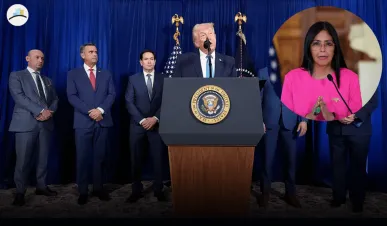
In a stunning and controversial move, U.S. President Donald Trump declared himself the “Acting President of Venezuela” in a recent post on his social media platform, Truth Social. The declaration has sent ripples through international political circles, raising questions about the legitimacy of foreign interventions and the future of Venezuela’s leadership.
US President Donald Trump has posted a photo of himself on his social media site Truth Social with his designation listed as "Acting President of Venezuela."https://t.co/ALytSmF5SX#UnitedStates #DonaldTrump #Venezuela #NicolasMaduro #OilReserves pic.twitter.com/pncLLE2qgg
— Business Standard (@bsindia) January 12, 2026
The Trigger Behind the Claim
The announcement came just days after a dramatic U.S. military operation led to the capture of Nicolás Maduro, Venezuela's long-standing president. Maduro and his wife, Cilia Flores, were taken into U.S. custody, facing charges related to alleged criminal activities. This event created a power vacuum in Venezuela, which has been at the center of global attention for years due to its ongoing political instability and economic crisis.
Following Maduro’s capture, Venezuela’s Supreme Court quickly appointed Delcy Rodríguez, the former vice president, as the interim president to maintain the country’s governance and seek a peaceful resolution to the crisis. However, Trump’s bold social media post presented an alternative narrative, claiming a U.S. role in Venezuela’s future by declaring himself acting president. This controversial statement adds a new layer to the already complicated political landscape in Latin America.
A Symbolic Declaration or a Strategic Move?
Trump’s declaration as Venezuela’s acting president, though without any formal recognition or legal backing, has stirred debate on the legitimacy of foreign influence in national leadership transitions. The post appeared to symbolize a shift in U.S. strategy toward Venezuela, with implications for its oil-rich economy and the broader geopolitical landscape of the region. The move is seen by many as a continuation of U.S. pressure on Venezuela, particularly regarding its alliances with adversarial countries and its involvement in global oil markets.
However, Delcy Rodríguez, appointed under Venezuela’s own legal framework, maintains that her government is the legitimate one, operating under the constitution. Yet, Trump’s actions, regardless of their legal standing, emphasize the U.S. government’s commitment to reshaping Venezuela’s future, particularly concerning its energy resources and the potential for economic stabilization.
International Reactions and What Lies Ahead
The post has triggered a flurry of reactions globally. Some argue that such actions undermine the sovereignty of Venezuela and disrespect international norms surrounding regime change. Others believe it reflects the reality of U.S. foreign policy, where the U.S. has long been involved in Venezuela’s internal affairs, supporting opposition figures and seeking to curb Maduro’s influence on the global stage.
While Rodríguez holds power within the country, the situation remains fluid. Trump’s statement, though not officially recognized by any international body, highlights the tension between Venezuela’s internal governance and external powers vying for control over its future. The path forward is uncertain, and it remains to be seen how this political drama will play out.
The Geopolitical Implications
The declaration adds another layer to the ongoing debate over foreign intervention and the complexities of global diplomacy. Venezuela’s political future, heavily influenced by external powers like the U.S., will undoubtedly have a lasting impact on the region. With major international actors involved in the reshaping of Venezuela’s government, the country’s sovereignty and self-determination are key issues that will continue to spark heated discussions.
As the situation develops, all eyes will be on Venezuela to see whether a peaceful transition of power can take place or if the country will continue to experience instability fueled by international interference and internal divisions.



