
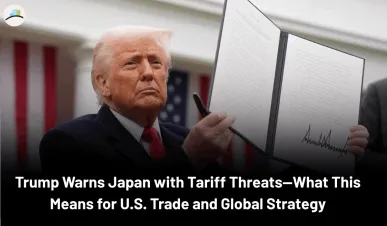
Trump’s message to Japan wasn’t loud—but it hit hard
So here’s what’s going on. Donald Trump recently sent private letters to Japan, basically saying that if trade imbalances continue, he’s ready to bring tariffs back—especially on Japanese goods. It sounds like the same kind of move he made when he was president the first time, but this time it feels different. He’s not even in office yet, and he’s already trying to shape the next phase of U.S. trade policy.
Now, Japan and the U.S. have always had a strong relationship. That’s what makes this so unusual. Japan isn’t China. It’s not even in a trade war with the U.S. In fact, Japan has been one of America’s closest allies in Asia for decades. So when Trump starts talking tariffs now—especially on autos and electronics—it kind of feels like it’s about more than just trade numbers.
PRESIDENT TRUMP WARNS: TARIFFS COMING AUG 1
— gtG (@g00dtoGreat) July 5, 2025
New rates range 10–70%, with letters going out Friday; Japan could face 30%+, violators “will be punished pic.twitter.com/R1PmEc6084
This probably has more to do with politics than economics
Let’s be real—Trump knows exactly when to send these kinds of signals. With the election just months away, this is most likely aimed at voters in states like Michigan, Ohio, or Pennsylvania. Manufacturing jobs are still a big topic there, and anything that sounds like “tough on trade” tends to hit well with those crowds.
But while this might work politically, it could get messy economically. Tariffs don’t just hurt the countries they’re aimed at. They can drive up prices at home, mess with supply chains, and hit American companies too. Especially now, when inflation is still not fully under control and industries like autos are deeply connected to Japanese parts and production.
The bigger risk is how this could affect U.S.–Japan trust
This is the part that probably isn’t getting talked about enough. When you go after a close ally with economic threats, even behind closed doors, it sends mixed messages. Right now, the U.S. and Japan are supposed to be working closely on a lot of big things—security, tech, trade, even rare earth minerals. They’re partners in trying to balance out China’s influence in the region.
So if Japan starts feeling like the U.S. is unpredictable or transactional, they might start making their own backup plans. That could mean stronger deals with Europe, more talks with India, or even more trade with China. That shift wouldn’t happen overnight—but it would be hard to undo later.
Japan isn’t powerless here
Another thing that’s easy to miss: Japan has some leverage too. They’re a big player in semiconductor production and have a hand in processing key minerals used in batteries and clean energy tech. They also invest a lot of money into U.S. businesses and hold a huge amount of U.S. debt. No one expects them to fire back publicly, but they do have ways to respond—quietly, through policy or trade choices.
And if they feel cornered, don’t be surprised if they start making trade deals that leave the U.S. out. That’s how countries protect themselves when they stop feeling secure in partnerships.
This feels a lot like history repeating itself
We’ve seen this kind of thing before. Back in 2018 and 2019, Trump slapped tariffs on China thinking it would fix the trade gap. What actually happened? The gap didn’t go away, American farmers took a hit, and prices on some products went up. A similar approach with Japan, which isn’t even hostile, might have even worse results.
Also, let’s not forget that a lot of Japanese companies actually build things in America. So if tariffs target Japanese brands, it might end up hurting American workers too—especially in places where these companies have factories and pay local employees.
More Articles:
The unintended costs could be pretty steep
If this trade fight escalates, there could be a lot of side effects—higher car prices, supply issues in tech, and more pressure on already stretched-out global logistics. Investors might also get spooked, especially if the back-and-forth starts to feel unpredictable.
And politically? It’s a gamble. Trump could rally some voters, sure. But he could also turn away moderates or business leaders who want stable markets and clear international relationships. That’s a risky line to walk, especially this close to election season.
Final thoughts
Trump’s letters to Japan might sound like another strong-handed trade move. But this isn’t just about numbers on a spreadsheet. It’s about how the U.S. handles its closest allies, how trade policy can spill into security partnerships, and whether voters are paying more attention to political messaging or long-term consequences.
The U.S. and Japan have worked hard to build a solid, balanced partnership. One letter—one tariff—might not destroy that. But it could start to weaken the trust that’s taken decades to build. And once that happens, it’s a long road back.



