
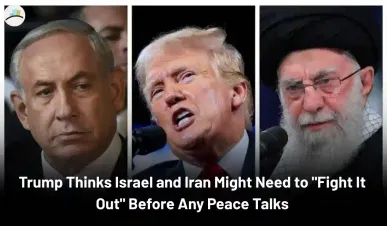
What Did Trump Actually Say?
So, here’s what’s going on — former U.S. President Donald Trump made a pretty bold comment while heading to the G7 summit. He was asked about the growing tension between Israel and Iran, and he said something like, “Sometimes they need to fight it out first” before making any kind of peace. He also mentioned that the U.S. isn’t involved in this right now — not directly anyway — but made it clear that if Iran messes with American interests, they’ll respond.
Now, if you remember how Trump handled things during his time in office, this isn’t totally out of character. He’s known for playing tough, like when he ordered that strike on Iranian General Qasem Soleimani back in 2020. That almost turned into a full war, but Trump believed it stopped something worse. So maybe this comment fits into that same kind of thinking — that a bit of a fight leads to a bigger deal later.
#US #President .@realDonaldTrump on Sunday urged #Iran and #Israel -- who are #locked in an #exchange of #military #strikes -- to "make a deal," but #suggested they might need to "fight it out" firsthttps://t.co/AkWHolZaXN
— The Daily Star (@dailystarnews) June 16, 2025
Israel and Iran Are Already in Action
While Trump talks about letting them “fight it out,” the truth is, they kind of already are. Israel recently launched a big military strike on Iran, targeting nuclear facilities and some military bases. In return, Iran fired missiles and drones at Israeli cities. Some of those hit civilian areas, and there have been injuries and deaths. It’s not just headlines — real people are getting hurt.
And it’s not just missiles flying around. Israel’s cybersecurity agency confirmed that Iran also tried to hack into things like their water systems and financial services. So now we’re talking about physical attacks and cyberattacks. That’s pretty serious, and it shows this isn’t just some brief skirmish — it’s turning into a multi-layered fight.
The U.S. Is More Involved Than It Seems
Even though Trump said the U.S. isn’t involved, some things are happening quietly behind the scenes. For example, officials from the U.S. State Department have confirmed that non-essential embassy staff in Tel Aviv are being pulled out. It’s not being shouted from rooftops, but it’s happening. You don’t do that unless you’re expecting something dangerous.
This kind of evacuation usually means the situation is too risky to ignore. Plus, U.S. intelligence is probably keeping an eye on any moves Iran might make toward U.S. military bases in the region. So even if the U.S. isn’t stepping in now, they’re definitely preparing for “what if.”
Why Trump Thinks Conflict Might Lead to Peace
It might sound weird, but Trump has always believed that tension or even conflict can push countries toward peace. He said something similar when dealing with North Korea or even India and Pakistan. His logic is kind of like — let the worst come out first, then sit at the table and fix it.
That’s probably what he meant here too. But the big difference this time is how fast things are moving. Unlike past tensions that dragged on, this one is exploding — literally and online. So the time for talks may not come until a lot more damage is already done.
More Articles:
What Could Happen Next?
At this point, there are several ways this could go:
-
Iran could decide to hit U.S. assets if things escalate more
-
Israel might double down with stronger airstrikes
-
Hezbollah in Lebanon could join in and create a bigger front
-
Or, there’s still a chance that some peace talks might come back on the table
Earlier, there were reports of backdoor talks happening in Oman and Rome between U.S. and Iranian officials. But after the attacks, those talks are now paused. So the future really depends on how far both sides want to take this.
Why This Isn’t Just Another News Story
This isn’t just about what two countries are doing on the other side of the world. Oil prices have already gone up sharply because of the conflict. That affects global markets, fuel costs, and even inflation. So yes, this matters to everyone, not just people in the Middle East.
Also, for the U.S., even though they say they’re on the sidelines, all the signs show they’re ready to step in if needed. And that could pull other countries in too — especially if this becomes a full regional war.



