
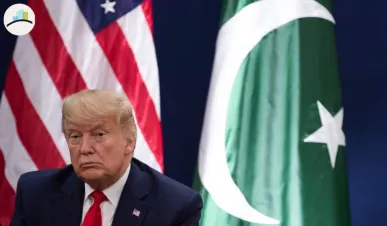
A Bombshell Revelation: Trump Claims Pakistan Testing Nukes Again.
MORE ARTICLES:
The Startling Revelation That Shook the World
In a dramatic and stunning revelation that has left the world on edge, former U.S. President Donald Trump dropped a bombshell: he claims that Pakistan has resumed nuclear weapons testing. This is no ordinary statement. It comes months after India’s Operation Sindoor, which had already raised the stakes in an already volatile South Asian landscape. And now, Trump’s allegations are bringing even more attention to an issue that could have massive global repercussions.
The revelation comes at a time when tensions in the region have been high, especially after India’s recent military actions and rising concerns over nuclear proliferation. What Trump’s claims suggest is not just a regional flashpoint but a serious escalation in the nuclear arms race—one that could threaten the fragile peace between two nuclear-armed nations: India and Pakistan.
The Bigger Picture: What Does Trump’s Claim Really Mean?
Trump's assertion that Pakistan is "testing nukes" is a game‑changer. It suggests that Pakistan, while maintaining a public stance of restraint, is quietly pushing the boundaries of its nuclear weapons development. If these claims are true, this could lead to a dangerous new chapter in global nuclear geopolitics.
The timing of these tests is also significant. The world is still reeling from Operation Sindoor, where India launched a major strike on Pakistan‑administered territory. This move came after years of simmering border tensions, and it raised fears of an escalating military conflict. In this context, Pakistan might be testing new nuclear capabilities as a message to both India and the international community: don’t forget, we have the power to retaliate.
Why Would Pakistan Risk Testing Nukes?
At first glance, the idea of Pakistan secretly conducting nuclear tests might seem reckless, especially given the intense global pressure to curb nuclear weapons. But there are several reasons why Pakistan could see these tests as necessary:
-
Deterrence and Power Projection: For Pakistan, nuclear weapons have always been a symbol of deterrence. By demonstrating its nuclear capabilities, Pakistan may be trying to send a message to India and the world: “We are a nuclear power, and we will not back down in the face of threats.”
-
Regional Rivalry with India: Tensions between India and Pakistan have always been rooted in territorial disputes and strategic rivalry. After Operation Sindoor, Pakistan might feel compelled to assert its strength to counterbalance India’s growing influence in the region, especially as India has been making significant strides in building stronger international alliances.
-
Internal Politics: Sometimes, nuclear tests can be politically motivated. If Pakistan is facing internal challenges or political unrest, the government may use a display of military strength as a way to unite the population or strengthen its position against external and internal adversaries.
What Does This Mean for Global Security?
If these claims are verified, the implications could be far-reaching. The return to nuclear testing by Pakistan would undermine decades of global efforts to curb nuclear proliferation and would likely prompt reactions from India, the United States, and other global powers.
-
South Asia on Edge: South Asia, home to 1.8 billion people, could become even more of a hotspot for nuclear conflict. With both India and Pakistan holding nuclear arsenals, the risk of a catastrophic miscalculation grows. The entire world will be watching the subcontinent more closely, as even small border skirmishes could escalate into something far more dangerous.
-
Global Nuclear Fallout: The nuclear non‑proliferation treaties that have governed global peace for years are already under strain. If Pakistan is indeed testing nuclear weapons, it would send a signal to other nations that nuclear development is still on the table. Other nations might feel justified in restarting their own weapons programs, leading to a global arms race—one that would be difficult to reverse.
-
A Shift in US Policy: Trump’s claim also raises questions about the future of U.S. policy on nuclear testing. While Trump advocates for the resumption of American nuclear testing, this revelation could force the Biden administration to take a harder stance on both Pakistan’s activities and the broader question of nuclear arms control.
What Could This Lead To? Possible Scenarios
As the world holds its breath, several outcomes could unfold from this crisis:
-
Increased Military Tensions: Pakistan’s nuclear tests could prompt India to ramp up its own military readiness, possibly leading to an escalation in military engagements. Border skirmishes could become more frequent, with both sides testing each other’s limits.
-
Sanctions and Diplomatic Pressure: If the international community confirms Pakistan’s testing, expect economic sanctions and diplomatic pressure to follow. Pakistan may face increased isolation, but it might also receive support from allies who want to counterbalance India’s rise.
-
Regional Arms Race: Pakistan's tests could force other nations, particularly in the Indo‑Pacific, to reconsider their nuclear strategies. Countries like China, North Korea, and even Iran may see Pakistan’s actions as a justification to expand their own nuclear capabilities.
-
A Call for a New Arms Control Treaty: In the long term, these events might prompt the world to push for a new global nuclear treaty—one that addresses the changing dynamics of nuclear powers and the rise of regional nuclear powers.



