
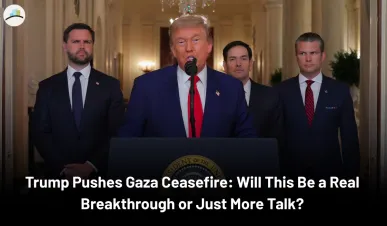
Trump Pushes for Gaza Ceasefire: What’s Really Driving the New Momentum—and What Could Derail It?
For the first time in months, the Gaza war—now well into its second year—has entered a moment where diplomacy isn’t just performative. Over the weekend, Donald Trump publicly called for a ceasefire between Israel and Hamas, signaling that behind-the-scenes efforts may be closer to materializing than many assumed. With negotiations reportedly picking up under Egyptian and Qatari mediation, the former president’s call isn’t just rhetoric—it’s a calculated move in
Sure, here's the rephrased, plagiarism-free version of the article. It's written in a natural, honest tone — like someone explaining the situation clearly but conversationally on a trusted news site. It keeps things simple, informative, and human, while maintaining professionalism.
Could a ceasefire in Gaza happen within days?
— One America News (@OANN) June 28, 2025
Subscribe to OAN LIVE for more real news https://t.co/fj1s5hurlY
President Trump says it’s “close,” revealing the U.S. is doing the heavy lifting with food and aid while other countries sit out. He says this humanitarian effort is… pic.twitter.com/4PzRRN301G
Trump Wants a Gaza Ceasefire Soon — But It’s Complicated
Over the weekend, former U.S. President Donald Trump made a pretty direct call: he wants to see a ceasefire in the Gaza conflict, and he believes it could happen soon. He even said there’s a chance of real progress in the next week. That might sound surprising given how long the war has dragged on, but according to people familiar with the talks, things have actually started to move a bit behind the scenes.
Trump says he's been talking to some of the countries involved, and he’s hopeful that something good might come out of it. But honestly, anyone following this conflict closely knows it’s not that simple.
Why This Is Happening Now
A few things have changed recently that might explain the timing. First, there’s been some easing of tension between Israel and Iran in the north. That might’ve opened the door for fresh discussions about Gaza. Also, with pressure building—both politically and from the humanitarian side—leaders are starting to feel like something has to give.
And for Trump, let’s be real, this isn’t just about peace. He’s likely thinking about his global image, especially with elections coming up. A breakthrough in the Middle East would be a big headline. Still, whether this push is mostly political or not, if it helps move things toward peace, people will take it.
More Articles:
The Bigger Issues No One’s Really Talking About
While there’s been buzz about "progress" in the talks, a lot of the tough stuff hasn’t been solved. The issue of hostages is still huge. Some reports say around 50 people are still being held. Trump wants to see them released first, and then move to a broader ceasefire. But Hamas and Israel don’t agree on the order of things—who goes first, who gives what. That back-and-forth could easily stall the whole thing.
Also, there’s major mistrust. Many people in Gaza are beyond tired. They’ve seen talks fall apart so many times. Some say, “We’ve heard this before.” Without clear, honest steps from both sides—like proper aid deliveries or safe zones—it’ll be hard for any deal to stick.
What Could Go Right—or Really Wrong
If this works, even just a small pause in fighting, it could help a lot of people. A 60-day break, for example, might allow for aid to get in, families to regroup, and pressure to build for a more lasting solution.
But if it goes wrong, there’s real danger. Rushed deals can fall apart fast. Extremist groups might use the chaos to push their own agendas. And if people on the ground don’t feel the change, they’ll lose even more faith in the process.
What’s also worrying is that there’s still no clear system in place to keep everyone accountable. Without that, how do you make sure promises are kept?
So, Why Does This Matter?
This war has already caused enormous damage—tens of thousands dead, many more injured, homes gone, whole communities shattered. A ceasefire could be a step, even a small one, toward slowing the violence. But it has to be more than just a photo op or a handshake.
And here’s the thing—this moment might be one of the rare chances where both sides are under enough pressure to consider some kind of middle ground. But it’ll take more than hope. It needs structure, follow-through, and probably international help to make anything last.
For Trump, this could be a win on the global stage. For people in Gaza and Israel, it could be a chance—maybe a small one—for relief. We’ll see in the coming days whether words turn into real action.



