
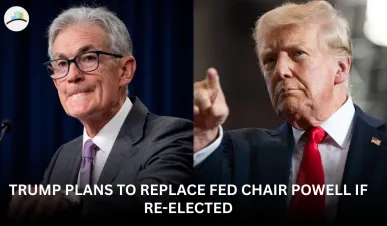
Former President Donald Trump told reporters this week he has “two or three choices” lined up to replace Federal Reserve Chair Jerome Powell if re-elected. On the surface, it sounds like typical Trump — blunt, brash, and headline-ready. But there’s more to this than politics or personal grudge. Trump’s comments hint at a broader shift in how he views the role of central banking, and what it means for the future of U.S. economic policy.
Why Is This Important?
Because the Fed isn’t just some academic institution setting interest rates — it's one of the most powerful economic engines in the world. Trump knows this. And if he regains the White House, he’s likely to push for a more compliant, growth-first Fed that aligns with his economic playbook: lower rates, looser monetary policy, and less independence.
This wouldn’t just be a personal vendetta against Powell — it could reshape the central bank’s credibility and signal a return to politicized monetary policy.
Trump may be succeeding in weakening the dollar. His trade moves and @federalreserve meddling have shaken investor confidence—now he’s signaling a new Fed pick early, potentially steering policy from the back seat before Powell’s term ends next May. pic.twitter.com/ofuqsW8Jce
— Bart Piasecki (@bart_piasecki) June 26, 2025
What’s Not Being Discussed Enough
1. It's Not Just About Interest Rates — It’s About Control
Trump has long criticized Powell for not cutting rates fast enough during his presidency, especially in 2018–19. But this isn’t just a clash over economic theory — it’s about who gets to call the shots. Trump wants a Fed Chair who’ll stimulate the economy on command, particularly heading into a second term where growth will be central to his legacy.
2. Potential for Market Volatility
Markets love stability. A Trump victory — paired with a Powell ouster — could jolt bond markets and shake investor confidence in the Fed’s independence. Expect short-term yield spikes, currency swings, and possible capital flight if investors see politics driving central bank policy.
3. It’s a Message to Wall Street and Main Street
This move isn't just aimed at technocrats in D.C. Trump is signaling to both Wall Street and voters: “I’ll take control of inflation and growth.” Whether or not that’s achievable, it’s a powerful campaign narrative, especially in an environment where the Fed remains cautious and inflation is sticky.
Hidden Risks and Long-Term Consequences
-
Undermining Fed Credibility: If the central bank becomes a tool of the executive branch, it risks losing global trust — particularly from investors, rating agencies, and international partners.
-
Overheating the Economy: Trump’s preference for lower rates, combined with tax cuts and deregulation, could overstimulate demand, driving inflation and asset bubbles — especially if the Fed Chair isn’t willing to push back.
-
Echoes of Nixon’s Fed Playbook: In the early 1970s, Richard Nixon pressured Fed Chair Arthur Burns to keep rates low before his re-election. The result? Stagflation, and a decade of economic instability. Trump’s stance feels eerily similar.
More Articles:
A Shift in the Role of the Fed?
Over the last several decades, the Fed has built its reputation on independence from political pressure. Trump is openly challenging that norm. If Powell is replaced with a loyalist, it could set a new precedent — one where the White House and Fed are increasingly aligned politically, not just economically.
Some might call that “efficient.” Others might call it dangerous.
The Bottom Line
Trump’s comments aren’t just about replacing one man — they’re about redefining the relationship between the presidency and the central bank. Whether you agree with his economic vision or not, one thing is clear: if Trump returns to office, the Fed could look a lot less like the old Fed — and a lot more like an extension of the Oval Office.



