
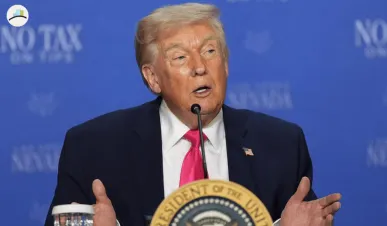
A major legal battle involving former President Donald Trump and the Internal Revenue Service (IRS) is drawing national attention after a federal judge raised serious concerns about whether the case should move forward. The lawsuit, which seeks $10 billion in damages, is now under close judicial review, with the court focusing not only on the claims but also on whether it has the authority to hear the case at all.
What Just Happened
Judge signals trouble for Trump’s $10B lawsuit against the IRS https://t.co/42wqV6PNe2
— POLITICO (@politico) April 25, 2026
A federal judge has asked both Trump’s legal team and government lawyers to explain why the lawsuit should proceed. The key issue is whether the case meets a fundamental legal requirement that there must be a genuine dispute between two opposing parties. The court is examining whether this condition is satisfied, given the unique relationship between the parties involved.
Why This Lawsuit Was Filed
The lawsuit is tied to the public release of Trump’s tax return information, which became widely discussed after being disclosed without authorization. Trump’s legal team argues that federal agencies failed to properly safeguard sensitive taxpayer data, resulting in significant harm. The case seeks financial damages based on the claim that the government did not fulfill its responsibility to protect confidential information.
MORE ARTICLES:
The Judge’s Core Concern: Can the Case Move Forward?
At the center of the case is a legal concept known as jurisdiction, which determines whether a court has the authority to hear a dispute.
| Legal Issue | What It Means | Why It Matters |
|---|---|---|
| Jurisdiction | The power of a court to hear a case | Without it, the case cannot proceed |
| Adversarial Requirement | There must be two opposing sides | Courts require a real conflict to issue rulings |
| Executive Oversight | Federal agencies fall under executive authority | Raises questions about independence between parties |
| Separation of Powers | Division of government authority | Ensures balance and prevents misuse of power |
The judge is questioning whether the lawsuit meets these basic requirements, particularly whether the parties involved can be considered truly independent from one another.
The Conflict Issue Explained
This case presents a complex situation. Trump is suing federal agencies such as the IRS and the Treasury Department, which operate within the executive branch of the government. This creates a legal dilemma, as courts typically require a clear and independent conflict between two sides.
In simple terms, the question is whether a lawsuit can proceed when the plaintiff and the defendants are part of the same broader system of authority. If the court determines that there is no true legal conflict, the case may be dismissed without examining the underlying claims.
What the Court Has Ordered
The judge has instructed both sides to submit detailed arguments addressing key legal questions. These include whether the case represents a valid dispute, whether the court has jurisdiction, and whether the parties involved are sufficiently independent. The outcome of this review will determine whether the lawsuit can move forward.
Key Components of the Case
| Element | Details |
|---|---|
| Plaintiff | Donald Trump and related entities |
| Defendants | IRS and U.S. Treasury Department |
| Claim Amount | $10 billion |
| Core Allegation | Failure to protect confidential tax data |
| Legal Challenge | Jurisdiction and validity of dispute |
| Current Status | Under judicial review |
Why This Case Is Unusual
This lawsuit stands out because it involves a former president taking legal action against federal agencies that are part of the executive branch. Cases like this are rare and raise important questions about how legal disputes are defined and handled within the federal system.
Courts are generally cautious when dealing with cases that could blur the boundaries between different branches of government. The outcome could influence how similar cases are approached in the future.
What This Means for the Public
For the general public, the case touches on several broader concerns. These include the protection of personal financial information, accountability within federal agencies, and the limits of executive authority. It also raises questions about how the legal system handles cases involving high-level government officials.
What Happens Next
The next step is for both sides to present their arguments to the court. The judge will then decide whether the case meets the necessary legal standards to proceed. If it is dismissed, the decision will likely be based on procedural grounds rather than the substance of the claims. If allowed to move forward, the case could become a significant legal precedent.
Final Take
This case is not just about financial damages; it is about the structure of the legal system and how it handles complex disputes involving government authority. The court’s decision will determine whether the lawsuit can proceed and may shape future interpretations of jurisdiction and accountability in similar cases.



