
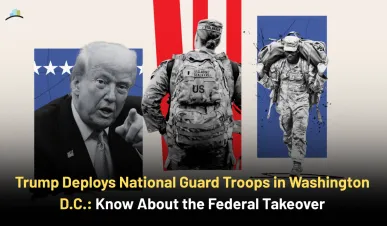
Trump’s National Guard Deployment in Washington D.C.: A Federal Move That’s Sparking Debate
In a bold move that has captured national attention, President Donald Trump has ordered the deployment of National Guard troops to Washington, D.C., positioning them as part of an ongoing federal effort to combat rising crime rates. However, as the dust settles, it’s clear that this intervention is more than just a matter of law enforcement; it’s raising questions about the balance of power, the role of federal government in local affairs, and the long-term effects on the political landscape.
DC National Guard is in position to be deployed ....
— Whiplash347 (@Whiplash437) August 10, 2025
At the same time the grand conspiracy treason is being revealed....
President Trump says he will FEDERALIZE D.C. ... revoking the autonomous status it shares with the Vatican and City of London ...
Do you see what’s… pic.twitter.com/YCBrdibOyw
The Immediate Context: A Federalized D.C.
On August 21, 2025, Trump’s administration executed an unprecedented action by deploying approximately 2,000 National Guard troops from Republican-led states like Mississippi and Louisiana. These troops joined an already sizable contingent of D.C.-based National Guard members to oversee public safety measures in the nation’s capital. According to Trump, the move is designed to curb violence and instability, positioning it as part of a broader strategy to "make cities safe."
While the move may sound like a typical response to rising crime, experts argue that the rationale behind it is more politically charged than the administration lets on. With local crime rates actually on the decline, questions arise: Why is this step necessary, and what might it mean for D.C.'s future?
MORE ARTICLES:
Unpacking the Bigger Picture: Why This Matters
The deployment of National Guard troops to Washington, D.C. signals a fundamental shift in the power dynamics between federal and local governments. Historically, the federal government has refrained from intervening in local law enforcement unless absolutely necessary. By federalizing D.C.’s law enforcement, Trump is not just addressing crime; he's pushing the limits of federal authority in a city that has long been a symbol of democratic governance.
This move could have far-reaching implications for cities across the country. Trump has already hinted at expanding this strategy to other Democratic-led cities, framing it as a necessary response to urban violence. But such a federalized approach could set a precedent for future administrations, effectively blurring the lines between federal oversight and local governance.
What’s Not Being Discussed: The Political Fallout
One aspect that isn’t getting enough attention is the impact this will have on the city’s political climate. Washington, D.C. is traditionally a Democratic stronghold, and the imposition of federal control is already fueling partisan tensions. Local leaders and residents are largely opposed to the federal presence, with recent polls showing 80% of D.C. residents disapprove of the takeover.
Furthermore, the decision to send National Guard troops from Republican-controlled states raises questions about the political nature of this intervention. It is not just about law enforcement; it’s about sending a message to other cities, particularly those that may not align with the current administration’s policies. This shift in strategy could set a dangerous precedent for federal interference in local matters, undermining the concept of local sovereignty.
The Hidden Risks: D.C.’s Future and Beyond
While the immediate focus is on crime, there are hidden risks that could manifest over time. The long-term presence of National Guard troops could normalize the idea of federal oversight in cities, particularly those governed by opposing political parties. This could lead to more frequent federal interventions in areas like policing, public health, and education, potentially weakening local control over critical issues.
Another risk is the potential alienation of immigrant communities. Recent moves, such as ICE agents accompanying patrols and cracking down on immigrant delivery drivers, are raising concerns about civil rights violations. Critics argue that such actions disproportionately target vulnerable populations, which could strain relations between law enforcement and the community.
Economic Implications: A Political and Financial Gamble
Economically, the deployment of National Guard troops in D.C. is a costly venture. The federal government will need to allocate significant resources to sustain this operation, all while the city’s economic recovery from the pandemic continues. The costs associated with maintaining the National Guard, not to mention the increased tensions that may arise, could divert resources from other areas of much-needed development.
Furthermore, Trump’s assertion that this action is necessary for “safety” could have unintended business consequences. Washington, D.C. is home to a diverse range of businesses and residents who could be directly affected by a militarized presence in their neighborhoods. In a city that thrives on political and economic engagement, a heavy federal hand could dampen investor confidence, making it harder for businesses to thrive in an environment of heightened tension.
The Broader Implications: What Happens Next?
As the National Guard continues to patrol the streets of Washington, D.C., it’s clear that this isn’t just a matter of crime prevention. It’s about asserting control, sending a message about federal authority, and potentially laying the groundwork for future political interventions in other cities across the country.
For residents and business owners, this federal intervention represents a critical moment in the history of American governance. With the future uncertain, one thing is clear: the actions taken today will shape the relationship between federal, state, and local authorities for years to come.



