
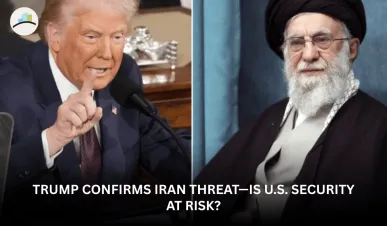
Trump Confirms Assassination Threat by Iran—But What's Really at Stake?
“Yes, there is a threat,” former U.S. President Donald Trump acknowledged, responding publicly to a chilling statement made by a senior Iranian military official who hinted at a potential assassination plot.
This isn’t the first time tensions between Trump and Iran have escalated to personal threats — but the renewed spotlight in 2025 comes at a crucial geopolitical crossroads. With the U.S. election looming and Middle East instability mounting, Trump's blunt confirmation adds fuel to a quietly growing fire.
Why Is This Happening Now?
This threat didn’t emerge in a vacuum. It is deeply connected to:
-
The 2020 assassination of Qassem Soleimani, Iran’s top general, ordered by Trump. That strike was a major rupture in U.S.-Iran relations, and many in Iran’s leadership vowed long-term revenge.
-
Iran’s rising influence in the region amid ongoing conflict in Israel-Gaza, instability in Iraq, and renewed ties with China and Russia.
-
Trump’s re-election campaign, which is making foreign policy a central theme—especially hardline stances against Iran, China, and NATO. Iran's warning could also be a strategic signal to influence U.S. domestic politics or paint Trump as a destabilizing force globally.
What Is Not Being Discussed Enough?
-
This is an intelligence nightmare: Assassination threats against former heads of state are taken seriously by the Secret Service and the intelligence community. But rarely are they so publicly acknowledged by the target. Trump's casual confirmation puts pressure on U.S. agencies to respond—or risk appearing unprepared.
-
Iran's evolving doctrine of retaliation: Iran isn’t operating under traditional rules anymore. Since Soleimani's death, its leadership has adopted asymmetric and long-term deterrence strategies, which include cyberattacks, proxy warfare, and psychological tactics like public threats.
-
Geopolitical messaging: The threat isn't just directed at Trump—it’s a signal to Washington that Iran is willing to retaliate far beyond its borders, if provoked again. It’s also a flex to its domestic audience that Tehran still seeks justice, even five years later.
More Articles:
Hidden Risks and Strategic Consequences
-
Escalation risk: If the threat is real and acted upon—or even if there's a failed attempt—it could trigger a massive military response from the U.S. regardless of who is in office.
-
Erosion of norms: Open threats against political leaders set a dangerous precedent in diplomacy. They normalize political violence as part of international power dynamics, undermining global stability.
-
Election volatility: Any act of foreign aggression against Trump would supercharge U.S. political polarization. It could harden support for him and justify aggressive foreign policy stances, reshaping America’s global role overnight.
Historical Parallel
There are echoes here of Iran’s fatwa against author Salman Rushdie in the 1980s, which had global repercussions for years. But this is far more serious — this is a state-level threat against a former president, in an era where cyber proxies and transnational actors make retaliation easier and harder to trace.
Why This Matters
This goes beyond Trump. It underscores a global shift in how nations apply pressure — through intimidation, information warfare, and symbolic aggression. If normalized, these tactics could redefine what global conflict looks like.
The Biden administration, intelligence agencies, and international observers will now face a difficult balancing act: how to respond without giving the threat more oxygen, while still protecting national interests and credibility.



