
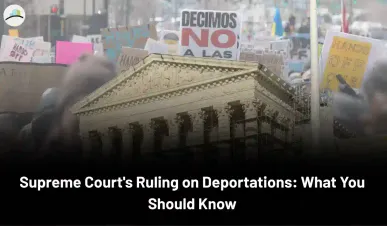
The U.S. Supreme Court has allowed the Trump administration to move forward with its policy of deporting immigrants to third countries, even if they have no connection to those places, such as South Sudan. This decision effectively overrides a previous ruling from a lower court that had blocked these deportations, claiming that immigrants should have the right to challenge their removal before it happens. With this latest decision, deportations are set to resume.
Supreme Court rules President Trump can resume third country removals without limited notice.
— Paul A. Szypula 🇺🇸 (@Bubblebathgirl) June 23, 2025
It was a 6-3 decision with the usual dissenters.
This ruling means that illegals can be deported to countries that are not of their origin.
Big win for mass deportations and America! pic.twitter.com/zCMuO8DOFQ
What Does This Mean?
In simple terms, the Court's ruling means that the government can send immigrants, including those who’ve committed crimes, to countries where they have no citizenship, and in some cases, no family. South Sudan, for example, is a country that is in the midst of ongoing conflict, and sending people there is raising serious concerns about their safety.
While the administration defends this policy as necessary to protect U.S. citizens by deporting criminals, critics argue that it’s unfair to send people to countries where they could be in danger. The question here is whether the safety of these deported individuals matters as much as the government’s broader immigration enforcement priorities.
Why This Decision Matters?
This ruling is important because it might have wider consequences for how future deportation cases are handled. If the policy stands, it could give the U.S. government more power to deport people without fully considering their safety or allowing them a proper chance to challenge the decision. This raises questions about whether the legal system is protecting people’s rights or prioritizing immigration enforcement at any cost.
There’s also a bigger question about how this decision might affect the U.S.'s relationship with other countries. If the U.S. continues to send people to places where they have no ties, it could lead to diplomatic tensions. Other countries might push back and refuse to accept deported individuals, which could complicate international relations even further.
More Articles:
Legal and Humanitarian Concerns
There’s a major human rights concern here that seems to be getting less attention. Sending people to dangerous countries without giving them the chance to prove their case seems to go against international laws that protect people from being sent to places where they could face persecution or death. Critics argue that this policy ignores those protections, and in doing so, puts lives at risk.
The decision also brings up moral and legal dilemmas—how do we balance national security with human rights? It’s a tough question, and the Court's ruling doesn’t offer an easy answer.
The Bigger Picture
This ruling is just one chapter in the ongoing debate about immigration and deportation in the U.S. While the policy might give the administration a win for now, it could have long-lasting effects, both for the individuals involved and for U.S. foreign policy. This decision raises questions about the fairness of the system, the safety of deported immigrants, and whether the government is willing to sacrifice human rights for enforcement goals.
As legal challenges continue, it’s likely that we will see more developments in the future. But for now, the administration is free to resume deportations, and that’s something that will likely keep people talking in the coming months.



